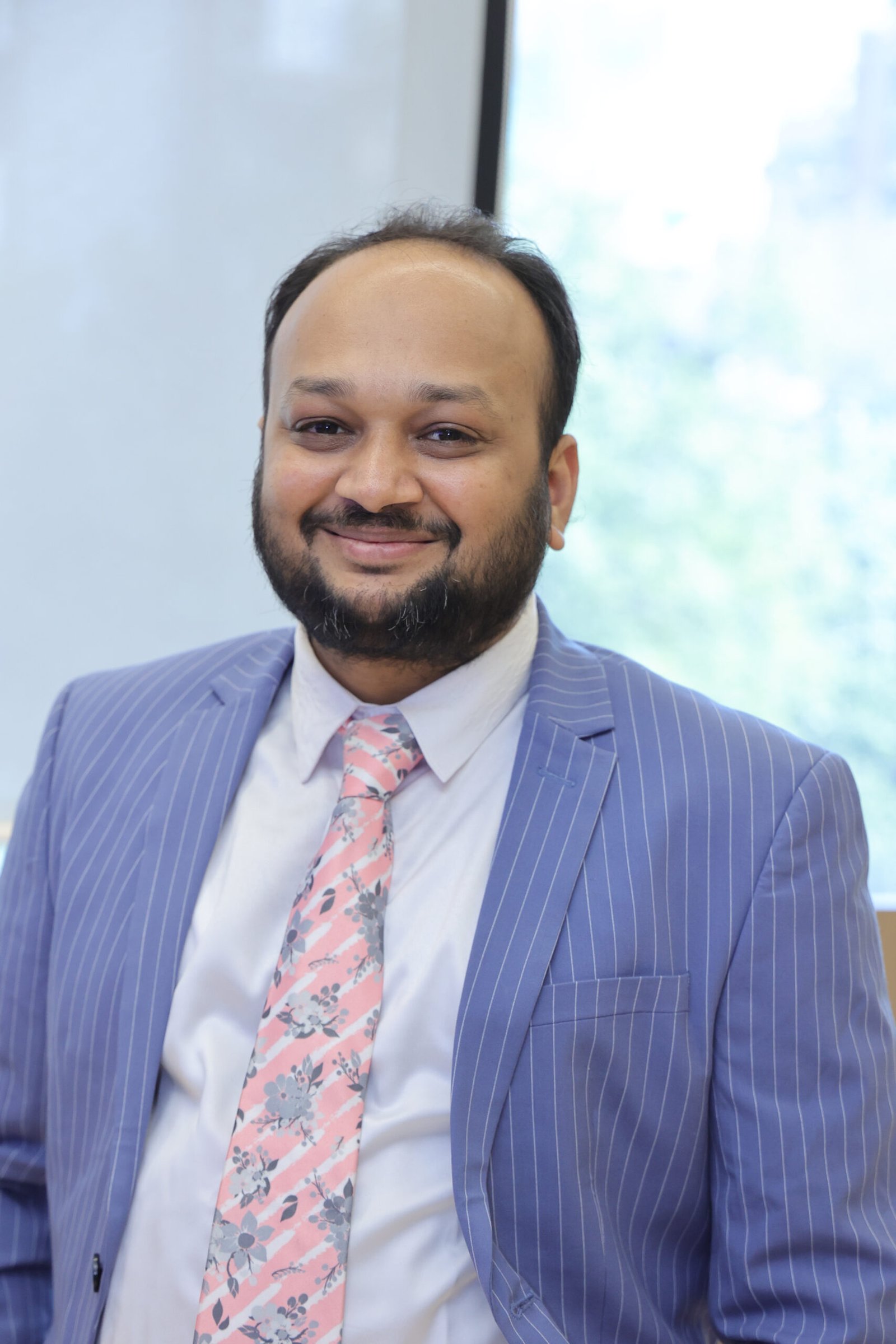
By Dr. Jignesh M. Gala — Vitreoretinal & Cataract Surgeon, Crystal Clear Eye Clinic, Andheri West, Mumbai
In July 2019, having completed my Medical & Surgical Retina fellowship at the L V Prasad Eye Institute and returned home to Mumbai, I joined Topiwala National Medical College and B.Y.L. Nair Charitable Hospital as Assistant Professor of Ophthalmology. For sixteen months — from July 2019 to November 2020 — I taught, operated, and looked after patients at one of the city’s oldest and most institutionally important public teaching hospitals.
The middle of that posting coincided with the first wave of the COVID-19 pandemic. What began as a structured academic role on a busy retina service became, by mid-2020, something rather different. This is the story of those sixteen months.
About B.Y.L. Nair Hospital and Topiwala National Medical College
B.Y.L. Nair Charitable Hospital — formally Bai Yamunabai Laxman Nair Charitable Hospital — was founded in 1921 and stands at Mumbai Central, on Dr. A.L. Nair Road. The hospital is attached to Topiwala National Medical College (TN Medical College), and together the two form one of Mumbai’s largest public tertiary teaching institutions, run by the Brihanmumbai Municipal Corporation (BMC).
Nair Hospital is the kind of hospital that defines public medicine in Mumbai. It runs busy outpatient clinics for every specialty under the sun, accepts emergencies twenty-four hours a day, trains generations of medical students and postgraduate residents, and treats patients across the full social and economic spectrum — from those who can pay nothing at all to those who travel from outside the state because they have heard of a particular consultant working there. The Department of Ophthalmology at Nair is one of the older and more respected ophthalmic teaching units in western India.
The Role: Assistant Professor of Ophthalmology
As Assistant Professor, my responsibilities ran across three parallel tracks. Each, in its own way, taught me things that I still carry into my practice today.
Clinical Work
I ran retina outpatient clinics, seeing patients with diabetic retinopathy, age-related macular degeneration, retinal vein occlusions, retinal detachments, and the full spectrum of complex retinal pathology that walks into the outpatient department of a tertiary public hospital in Mumbai. The volume was substantial. The clinical mix was extraordinary — in any given session I might see early diabetic macular oedema in one patient, advanced proliferative retinopathy in the next, a peripheral retinal tear in a third, and a complex post-traumatic vitreous haemorrhage in the fourth.
Surgical Work
Vitreoretinal surgery at Nair was performed on the Faros system — the Swiss-designed Oertli Faros, a combined phacoemulsification and posterior vitrectomy platform that allowed both anterior and posterior segment procedures to be performed on the same patient when needed. I operated on retinal detachments, performed vitrectomies for non-clearing vitreous haemorrhages, did membrane peels for epiretinal membranes and macular holes, and managed complex post-cataract retinal complications.
Alongside the vitreoretinal work, I also continued operating cataracts, including the more complex referred cases that arrived at Nair from the wider BMC network. And in our outpatient injection clinic, I administered several hundred intravitreal injections — anti-VEGF agents for diabetic macular oedema, age-related macular degeneration, and retinal vein occlusions.
Teaching
Nair runs a vitreoretinal fellowship programme recognised by the Maharashtra University of Health Sciences (MUHS). My role included direct teaching of the MUHS retina fellows — supervised outpatient sessions, surgical instruction in the operating theatre, structured tutorials, case discussions, and the informal teaching that fills the long shared hours of public-hospital practice. There is a particular kind of clinical knowledge that you only properly acquire when you have to teach it to someone else, in real time, with a patient in front of you. The fellows kept me honest.
Working With Dr. Saroj Sahdev
I worked closely with Dr. Saroj Sahdev, the senior consultant ophthalmologist whose mentorship shaped much of my time at Nair. A senior teaching ophthalmologist in the department, Dr. Sahdev had years of accumulated experience in public-hospital ophthalmology — the particular kind of experience that you can only build by running a busy department in a city like Mumbai over a long career.
Working alongside her, I learned things that no fellowship can formally teach: how to triage a sudden vision-loss patient in an outpatient clinic of fifty, how to run a teaching department through the kind of unscheduled crises that public hospitals routinely throw up, and how to keep patient care intact when the system around you is operating under stress.
Much of what I know about the practice of public hospital ophthalmology, as opposed to the technical content of it, I owe to her.
When the Pandemic Arrived
In March 2020, the COVID-19 pandemic reached India. By April, Mumbai was in lockdown. Nair Hospital, like every major public hospital in the city, was redesigned almost overnight into a frontline COVID-19 facility.
Routine ophthalmology services were paused. Elective surgery stopped. Outpatient clinics ran with minimal numbers, under strict infection-control protocols, and only for genuine emergencies — sudden vision loss, acute glaucoma, post-operative complications, retinal detachments that could not wait. Like every doctor employed in the hospital, regardless of specialty, I was rostered for COVID-19 duties — the redeployment of clinical staff into the city’s pandemic response, including work that had nothing to do with ophthalmology.
I am not going to pretend that part of the posting was the most professionally satisfying. It was not. But it was the right thing to do. Public-hospital doctors in India responded to the pandemic the way public-hospital doctors everywhere responded — by going to work, doing whatever was asked of them, and trying to look after the patients who arrived at their doors. That experience, exhausting as it was, taught me something about institutional medicine that I had not properly understood before. When a healthcare system is asked to surge, the doctors are the system.
What I Brought Back
When I left Nair in November 2020 to focus on my own practice, I took several things with me.
The first is a tolerance for high clinical volume. After sixteen months of running retina clinics in a public hospital, the busiest day in private practice feels manageable. The pace of Nair recalibrates your sense of what is normal.
The second is a teaching habit. Once you have spent months instructing retina fellows, the instinct to explain — to take the extra two minutes with a patient to walk them through their own pathology — becomes automatic. Patients at my own clinic now benefit, in small ways, from a habit that was built at Nair.
The third is a respect for public medicine. Nair Hospital looks after patients who have nowhere else to go. The doctors there work harder, for less, than almost any other group of clinicians in the city. That experience permanently changes how a younger doctor thinks about their profession.
The fourth — and perhaps the most important — is the pandemic perspective. Having worked through the 2020 wave at a frontline public hospital, I came out of it with a sharper sense of priorities. What matters in clinical work. What does not. And how much of medicine is really about being present for the patient in front of you, regardless of what the institution around you is going through.
Today
I now run my own practice at Crystal Clear Eye Clinic in Andheri West, where I focus full-time on vitreoretinal and cataract surgery. The volumes are smaller than at Nair. The patient mix is different. The institutional pressures are different.
But the way I approach a retinal detachment, the way I explain diabetic eye disease to a newly diagnosed patient, the way I run an intravitreal injection clinic, and the unhurried care I try to take with every patient regardless of how busy the day has been — all of these were shaped, in important ways, by the sixteen months I spent on the retina service at B.Y.L. Nair Hospital.
I am grateful to have done that work. And I am grateful, particularly, to Dr. Sahdev, to the MUHS retina fellows I taught, and to the public hospital doctors I worked alongside through the first wave of the pandemic.
About the Author
Dr. Jignesh M. Gala is a vitreoretinal and cataract surgeon based at Crystal Clear Eye Clinic, Andheri West, Mumbai. He holds the Refraction Certificate of The Royal College of Ophthalmologists, London (2017), FICO (London) from the International Council of Ophthalmology (2016), and MRCS (Edinburgh) and FRCS (Glasgow) — dual Royal College surgical qualifications from the United Kingdom (both 2018). He completed dual fellowships in Comprehensive Ophthalmology and Medical & Surgical Retina at L V Prasad Eye Institute, Hyderabad. From July 2019 to November 2020, he served as Assistant Professor of Ophthalmology at Topiwala National Medical College and B.Y.L. Nair Charitable Hospital, Mumbai. He subsequently served as a Resident Physician with the Department of Ophthalmology, Woodlands Health (NHGEI), Singapore (2021). He has been a peer reviewer for BMJ Case Reports since November 2019.
To book a consultation: 🌐 crystalcleareye.in 📞 +91 70450 00503 💬 WhatsApp +91 77188 85245 📍 Crystal Clear Eye Clinic, Laram Centre, Andheri West, Mumbai