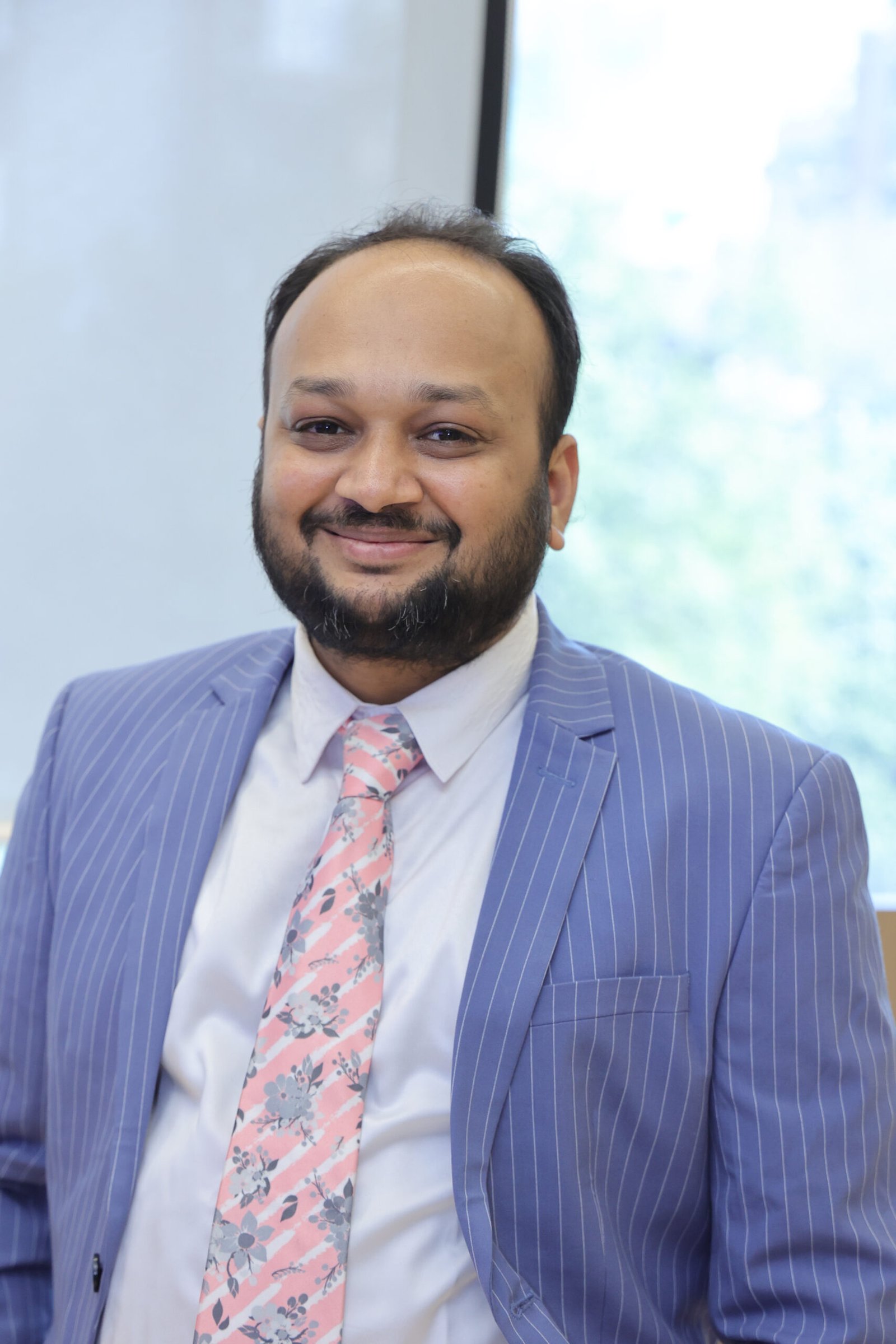
By Dr. Jignesh M. Gala — Vitreoretinal & Cataract Surgeon, Crystal Clear Eye Clinic, Andheri West, Mumbai
On 8 February 2021, I joined the Department of Ophthalmology at Woodlands Health (WH) in Singapore, part of the National Healthcare Group Eye Institute (NHGEI). I returned to India on 31 December that same year. Eleven months. It does not sound long when you say it out loud. But it remains, in many ways, one of the most professionally demanding and clinically rewarding periods of my career.
This is the story of that year.
A Hospital Being Built
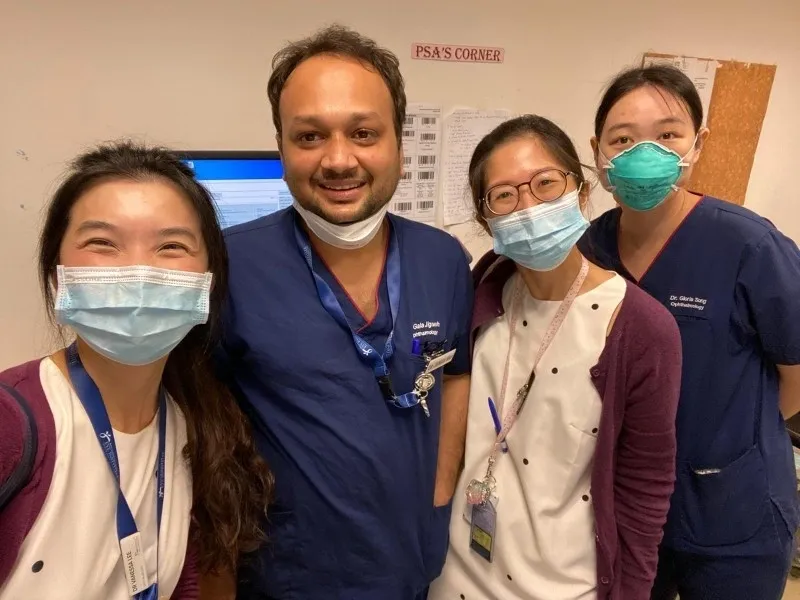
The Woodlands Health Campus — the institution that hired me — was, at the time I joined, still under construction. Building work was underway in the north of Singapore for what would become an integrated regional medical campus, eventually opening progressively from the end of 2023. In the meantime, the Woodlands Health Department of Ophthalmology operated as part of the broader National Healthcare Group, with our clinics based out of Tan Tock Seng Hospital (TTSH) in central Singapore and our team integrated closely with the established NHGEI consultant body.
This was an unusual position to walk into as an overseas physician. I was joining a team that was simultaneously a high-functioning tertiary ophthalmology service and a founding clinical team for a hospital that did not yet exist. Both halves of that identity were visible every day: the discipline of a major academic centre, and the energy of a group of clinicians actively shaping what their future department would become.
The Daily Rhythm: 7 AM to 8 PM
The Singapore working culture in academic medicine is unlike almost anywhere else I have practised. The day started at 7:00 AM with morning Continuing Medical Education (CME) — daily, not weekly. For one hour, before any clinic opened or any operating theatre lit up, the entire department would gather for case presentations, journal club, subspecialty teaching, or visiting-speaker sessions. By 8 AM we were in clinic or in theatre, and we did not stop until approximately 8:00 PM.
Twelve-hour days, six days a week, for eleven months. There were times I felt the fatigue acutely. There were other times — and this is the honest truth of it — when the work was so absorbing that I lost track of the hours entirely.
The Weekly Schedule, the Volume, the Breadth
The week was structured carefully:
- Three days a week — general ophthalmology clinic. Walk-in and referred patients across the full spectrum of ophthalmic complaints. Volumes of 60 to 80 patients per day were not unusual.
- Two days a week — retina subspecialty clinic. Diabetic retinopathy, age-related macular degeneration, retinal vein and artery occlusions, vitreomacular interface diseases, intravitreal injections, retinal laser procedures.
- Operating theatre days scattered through the week — cataract surgery, basic vitreoretinal interventions, glaucoma procedures.
- Emergency duty roughly twice every month — on-call cover for any ophthalmic emergency presenting to the network, including trauma, acute angle-closure glaucoma, sudden vision loss, endophthalmitis, and post-operative complications.
In a normal week I would see upwards of three hundred patients. Over the course of eleven months, the cumulative caseload was, by any reasonable measure, substantial.
A Genuinely International Patient Population
One of the things you do not fully appreciate about Singapore until you practise there is the demographic breadth of its patient population. Within a single morning’s clinic I would routinely see Singaporean Chinese patients, Indian and Sri Lankan migrant workers, Indonesian and Malaysian residents, and occasional Australian and American expatriates — and the children and elders of all of the above.
This kind of patient mix teaches things that single-population practice cannot. The presentation of diabetes is different across different ethnic groups. The progression of glaucoma differs across populations. The way a patient understands and accepts a diagnosis is shaped by their cultural and linguistic context. Learning to work across all of this — and to do it efficiently, in a system where the next patient was already waiting — was one of the most valuable parts of the year.
Subspecialty Exposure Across the Eye
The Woodlands Health Department of Ophthalmology was deliberately structured to cover every major ophthalmic subspecialty, and during my eleven months there I worked alongside consultants and trained across:
- Glaucoma
- Cornea and refractive surgery
- Uveitis and ocular immunology
- Vitreoretinal medicine and surgery
- Oculoplastics
- General ophthalmology and comprehensive eye care
The one subspecialty I did not work in during this period was paediatric ophthalmology, which was managed elsewhere in the network. Every other field, I had direct clinical exposure to.
I performed many retinal laser procedures for diabetic retinopathy, retinal tears, and vascular occlusions, alongside many glaucoma laser procedures including selective laser trabeculoplasty (SLT) and peripheral iridotomy. Midway through the posting I sat and passed the department’s internal retina laser certification examination — which was, in its own quiet way, one of the personally satisfying milestones of the year.
My Mentor — Dr. Elton Tay
Among all the consultants I worked alongside, the one I owe the most to is Dr. Elton Tay, the Head of the Ophthalmology Department at Woodlands Health Campus. Dr. Tay is one of those rare consultants who is dual-accredited in two fields entirely — Ophthalmology and Aviation Medicine — and who carries that breadth into the way he approaches every case. A glaucoma subspecialist who completed his fellowship at the Lions Eye Institute and Royal Perth Hospital in Australia, the Stewart Memorial Prize winner for his Diploma of Aviation Medicine (UK, 2006), and a certified medical assessor at the Civil Aviation Authority of Singapore — Dr. Tay had a clinical decision-making style that I tried, every day, to learn from.
He was generous with his time. He was patient with overseas trainees. He was — and I say this as the highest compliment one clinician can pay another — never visibly in a hurry, even when the clinic was overflowing. The cumulative effect of working under someone like him for eleven months is something I still feel, in small ways, in every consultation I run today.
What I Brought Back to Mumbai
When I returned to India at the end of December 2021, I brought back several things that are now part of my daily practice at Crystal Clear Eye Clinic.
The first is clinical pace. The Singapore system is built around moving large volumes of patients through high-quality care without compromise — and the discipline of that taught me how to make every minute of a consultation count while still listening fully to the patient in front of me.
The second is breadth of exposure. By the end of my eleven months I had touched every subspecialty in the adult eye, including cases I might not have encountered in a more narrowly defined fellowship. That breadth informs the way I think about even routine cataract cases today: the eye is never just an eye in isolation.
The third is the international patient lens. I had treated patients from a dozen different national, linguistic, and cultural backgrounds, and that has made me a more attentive, more adaptable clinician in Mumbai — a city that is, in its own way, just as cosmopolitan as Singapore.
The Singapore year did not give me a new certificate or a new degree. It gave me something more durable than that: a clinical operating system, refined inside one of the most rigorous health systems in Asia, that I now run in my own clinic every working day.
About the Author
Dr. Jignesh M. Gala is a vitreoretinal and cataract surgeon based at Crystal Clear Eye Clinic, Andheri West, Mumbai. He holds MRCS (Edinburgh) and FRCS (Glasgow) — dual Royal College surgical qualifications from the United Kingdom — along with FICO (London) from the International Council of Ophthalmology. He completed dual fellowships in Comprehensive Ophthalmology and Medical & Surgical Retina at L V Prasad Eye Institute, Hyderabad, and served as a Resident Physician with the Department of Ophthalmology, Woodlands Health, National Healthcare Group Eye Institute, Singapore (2021). He is a peer reviewer for BMJ Case Reports.
To book a consultation: 🌐 crystalcleareye.in 📞 +91 70450 00503 💬 WhatsApp +91 77188 85245 📍 Crystal Clear Eye Clinic, Laram Centre, Andheri West, Mumbai