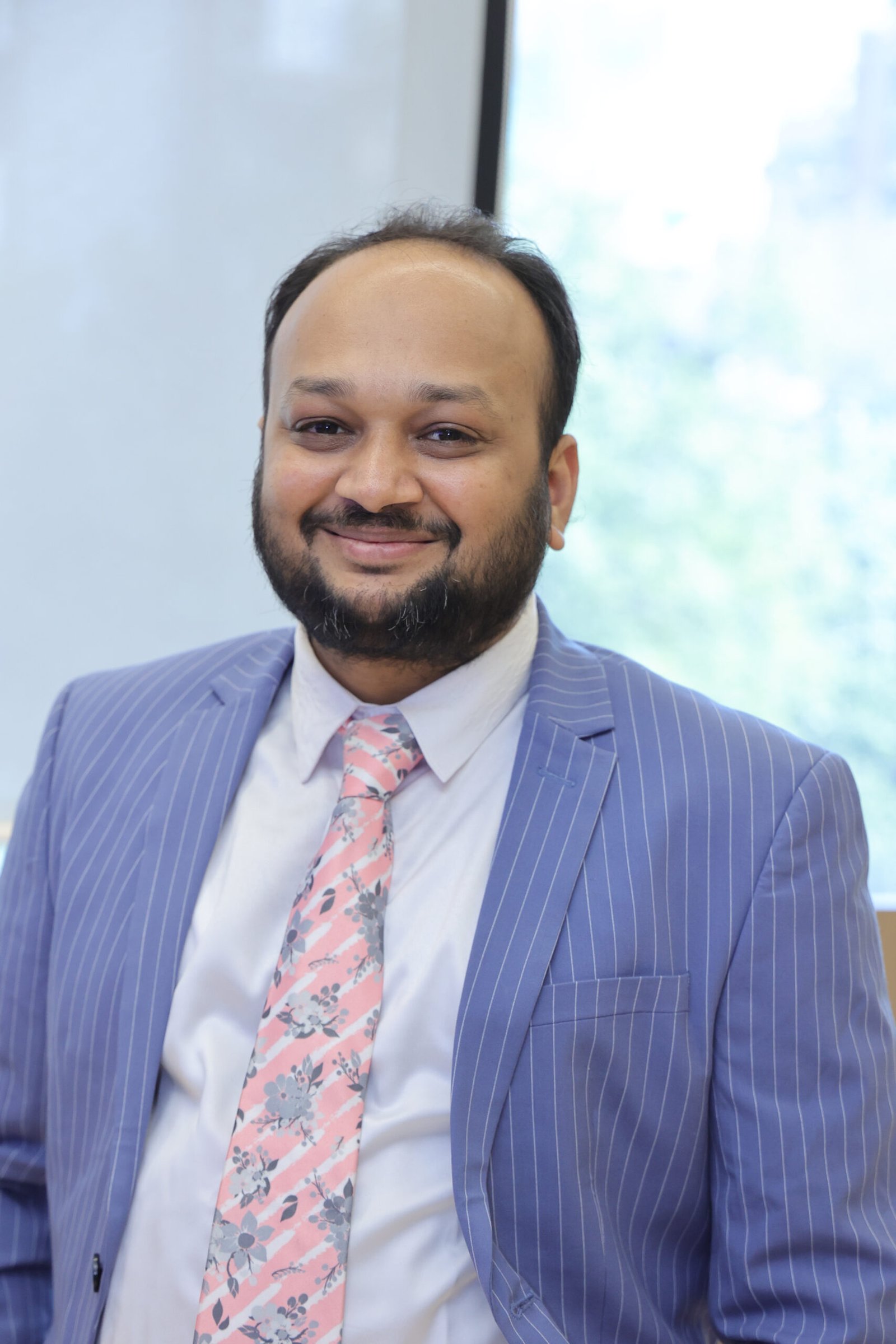
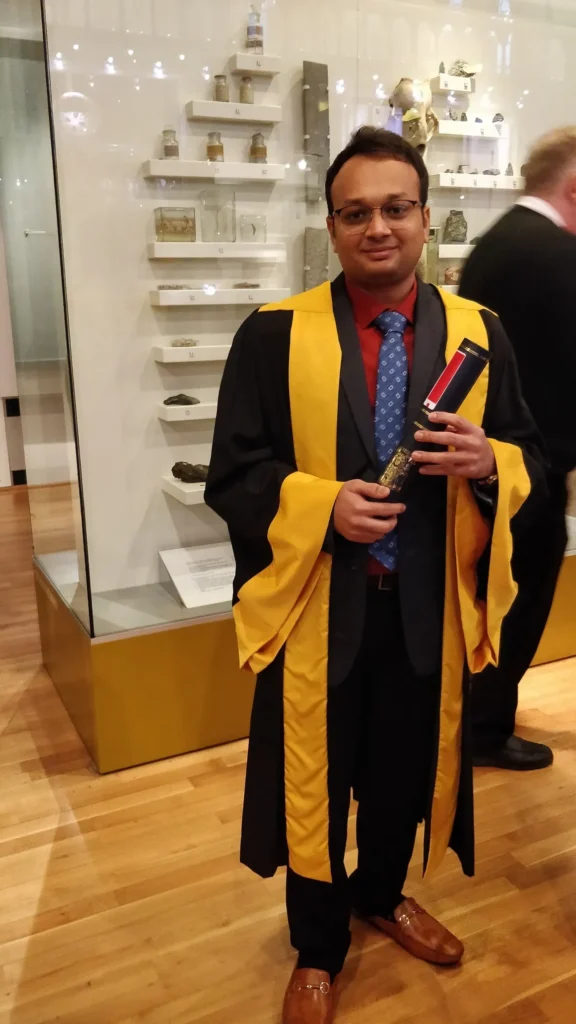
By Dr. Jignesh M. Gala — Vitreoretinal & Cataract Surgeon, Crystal Clear Eye Clinic, Andheri West, Mumbai
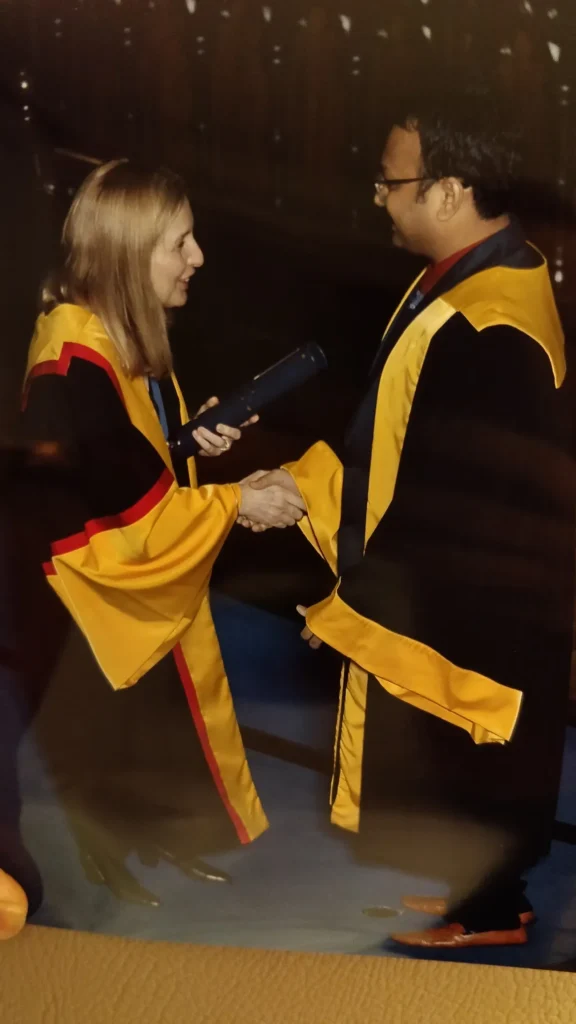
In 2018, after years of preparation, two written examinations, and the structured oral and clinical examination that the Royal College of Physicians and Surgeons of Glasgow requires of every candidate, I completed Part 3 — the final part — of the FRCS Ophthalmology. The letters “FRCS (Glasgow)” that I am entitled to use after my name are, in many ways, the credential I have worked hardest for and the one I value most.
I want to use this post to explain — for patients, for colleagues, and for any aspiring ophthalmologist reading this — what the FRCS Ophth (Glasgow) actually is, what the examination tests, and why the qualification matters.
A Royal College Founded in 1599
The Royal College of Physicians and Surgeons of Glasgow (RCPSG) was incorporated by royal charter in 1599. To put that in perspective: when the College came into being, William Shakespeare was still writing plays in London, the British East India Company had not yet been formed, and the printed book itself was barely a century and a half old.
Today, RCPSG is the only Royal College in the United Kingdom that welcomes healthcare professionals across the full range of medical and surgical specialties — physicians, surgeons, dentists, travel medicine specialists, podiatrists, and more — under one truly multidisciplinary roof. For over four centuries, its purpose has been the same: to set, maintain, and certify standards of medical and surgical practice.
An FRCS (Glasgow) is therefore not simply a postgraduate qualification. It is admission to a fellowship of one of the oldest surviving medical institutions in the world.
The Three-Part Examination
The FRCS Ophthalmology examination, awarded by RCPSG, is delivered in three sequential parts. You cannot sit Part 2 without passing Part 1. You cannot sit Part 3 without passing Part 2. Each part is independently challenging, and each is designed to assess a different layer of what an independent, consultant-grade ophthalmologist should know.
Part 1 — Basic Sciences
The first written paper tests the scientific foundation of ophthalmic surgery: 160 multiple-choice questions in two hours, covering the anatomy of the eye and orbit, the physiology of vision, the biochemistry of the lens and cornea, and the optics that govern how we correct refractive errors.
There is no shortcut here. Without a granular command of the basic sciences, you do not pass.
Part 2 — Clinical Knowledge
The second written paper is more demanding still: 180 multiple-choice questions in two and a half hours, testing ophthalmic medicine, ophthalmic surgery, general medicine, and neurology as they relate to eye disease.
The eligibility itself is rigorous. Candidates must hold a primary medical qualification accepted by the General Medical Council of the United Kingdom and must have completed at least six years of post-qualification experience, of which at least four and a half years must be in clinical ophthalmology posts. This is not a qualification one stumbles into early in training.
Part 3 — The Final Examination
The third and final part is what separates a candidate from a Fellow. Part 3 is held in person at examination centres across the world and is, by some distance, the most demanding of the three.
It comprises two sections that must both be passed in a single sitting:
1. The Structured Oral Examination — three twenty-minute stations, each conducted by two senior examiners, covering:
- Lids, oculoplastics, and the anterior segment
- The posterior segment (retina, vitreous, choroid)
- Neuro-ophthalmology, ocular motility, and general medicine
2. The OSCE (Objective Structured Clinical Examination) — a series of clinical stations involving real clinical scenarios: interpreting OCT scans, fundus photographs, and visual fields; examining patients in real time; demonstrating safe decision-making under examination pressure.
This is where theoretical knowledge meets clinical judgement. Two senior ophthalmologists sitting across a table from you can ask anything — and they do. They are not looking for textbook answers. They are looking for the kind of reasoned, evidence-based, patient-first thinking they would expect from a consultant ophthalmologist working independently in the British National Health Service.
What the Fellowship Actually Represents
In the College’s own language, the award of the Fellowship is intended to be a “validation of an ophthalmologist’s knowledge, experience and training,” and candidates who achieve the FRCS are judged to have the skills of a General Ophthalmologist, able to “manage patients and their ophthalmic conditions independently in a safe and professional manner.”
In practical terms, this means three things for a patient considering treatment with an FRCS-qualified surgeon:
First, an independent international body of senior surgeons has examined and certified the surgeon’s competence. Not the surgeon’s institution. Not the surgeon’s employer. Not the surgeon’s own teachers. An arm’s-length, examination-based assessment by experienced ophthalmologists whose only incentive is to maintain the College’s standards.
Second, the certification is internationally recognised. The FRCS Glasgow is accepted as part of the registration process with the General Medical Council of the UK and is treated as equivalent to local specialist board examinations in many countries across the Middle East, South Asia, and Africa.
Third, the qualification requires continuous fellowship engagement. Becoming a Fellow does not end with the certificate. It begins with it — through ongoing continuing professional development and adherence to the College’s standards.
Why I Chose to Sit These Exams
I was already a fellowship-trained ophthalmologist when I sat the FRCS exams. I had completed my Comprehensive Ophthalmology fellowship at the L V Prasad Eye Institute, I was deep in my Medical & Surgical Retina fellowship at the same institute, and I was, by any reasonable measure, qualified to practise independently.
So why do it?
Because the FRCS process forces you to rebuild your knowledge from first principles. It is not a course you attend; it is a standard you meet. Preparing for Part 1 sent me back to anatomy and optics textbooks I had not opened in years. Preparing for Part 2 forced me to refresh my reading on general medicine and neurology — topics that ophthalmologists too easily treat as somebody else’s department, but which matter enormously in everyday eye practice. Preparing for Part 3 made me articulate, out loud and under examination conditions, the clinical reasoning that I had developed almost subconsciously over years of training.
The exam did not, by itself, make me a better surgeon overnight. But the preparation for it — and the discipline of meeting an external, internationally calibrated standard — absolutely did. By the time I sat in front of those examiners in 2018, I was a different clinician from the one who had started the process.
What This Means for My Patients in Mumbai
When a patient walks into Crystal Clear Eye Clinic in Andheri West today, they are not, of course, primarily interested in the letters after my name. They want to know whether their cataract surgery will be safe, whether their retinal detachment can be repaired, whether their child’s premature retina is healthy.
But behind those answers lies the cumulative judgement of years of training that culminated, for me, in passing the FRCS Glasgow in 2018. That judgement is what I bring into every operating theatre and every consultation. The FRCS is not the headline of my work — it is part of the foundation that the work rests on.
To any aspiring ophthalmologist reading this who is considering the FRCS pathway: it is worth it. It will be one of the more demanding things you do in your career. But the discipline it forces, and the certification it grants, are genuinely meaningful — both to you and, more importantly, to the patients whose eyes you will eventually hold in your hands.
About the Author
Dr. Jignesh M. Gala is a vitreoretinal and cataract surgeon based at Crystal Clear Eye Clinic, Andheri West, Mumbai. He holds FRCS (Glasgow) from the Royal College of Physicians & Surgeons of Glasgow and MRCS (Edinburgh) from the Royal College of Surgeons of Edinburgh, along with FICO (London) from the International Council of Ophthalmology. He completed dual fellowships in Comprehensive Ophthalmology and Medical & Surgical Retina at L V Prasad Eye Institute, Hyderabad, and served as a Resident Physician in the Department of Ophthalmology at Tan Tock Seng Hospital, Singapore (2021–2023). He is a peer reviewer for BMJ Case Reports.
To book a consultation: 🌐 crystalcleareye.in 📞 +91 70450 00503 💬 WhatsApp +91 77188 85245 📍 Crystal Clear Eye Clinic, Laram Centre, Andheri West, Mumbai