
Medically reviewed and written by Dr. Jignesh Gala, Vitreoretinal & Cataract Surgeon, Founder & Director — Crystal Clear Eye Clinic and Topax Eye Hospital, Mumbai. Last updated: 22 July 2026.
Intravitreal Injection in Andheri West, Mumbai — Painless Anti-VEGF Eye Injections by Dr. Jignesh Gala (FRCS)
Medically reviewed and written by Dr. Jignesh Gala, Vitreoretinal & Cataract Surgeon, Founder & Director — Crystal Clear Eye Clinic and Topax Eye Hospital, Mumbai. Last updated: 22 July 2026.
⚡ Quick answer: An intravitreal injection is a painless, 5-minute clinic procedure where medicine (anti-VEGF or steroid) is placed inside the eye to treat diabetic retinopathy, macular edema, wet AMD, retinal vein occlusion and more. At Crystal Clear Eye Clinic, Andheri West, it costs ₹7,000–₹65,000 per injection depending on the drug, is performed personally by retina specialist Dr. Jignesh Gala (FRCS Glasgow, LVPEI-trained), and cashless insurance is available. Call 077188 85245 for same-week appointments.
If your eye doctor has advised an “eye injection” — Avastin, Eylea, Lucentis, Vabysmo, Razumab or Ozurdex — you probably have questions: Does it hurt? Is it safe? How many will I need? What will it cost in Mumbai? Will insurance pay? This complete 2026 guide answers everything, backed by 200+ verified research references (PubMed, AAO, ASRS, EyeWiki, ClinicalTrials.gov — all linked at the bottom), and explains why patients from Lokhandwala, Versova, Juhu, Vile Parle, Jogeshwari, Goregaon, Bandra and across Mumbai choose our clinic for their intravitreal injection in Andheri West.
📋 In this guide:
- What is an intravitreal injection?
- Conditions we treat with eye injections
- Every drug explained — biosimilars to Vabysmo & Eylea HD
- Step-by-step: our painless injection protocol
- Safety, endophthalmitis prevention & real statistics
- How many injections will I need? (treat-and-extend)
- Cost in Mumbai & Year-1 budget math
- Cashless insurance — Topax (direct) & Crystal Clear (TPA)
- Why Dr. Jignesh Gala for your eye injection
- Practising at the edge of the latest research
- Reaching us — Andheri West & nearby suburbs
- FAQs
- Research & Evidence Library (200+ links)
1. What Is an Intravitreal Injection?
The vitreous is the clear gel filling the back two-thirds of your eye, sitting directly in front of the retina. An intravitreal injection places a tiny volume of medicine (usually 0.05 ml through a hair-thin 30-gauge needle) directly into this gel — delivering the drug straight to the retina at concentrations no tablet or eye drop can ever achieve. It is today the single most commonly performed eye procedure worldwide, and the global standard of care for retinal swelling, bleeding and abnormal blood-vessel growth (Asia-Pacific J Ophthalmol — technique & safety review; EyeWiki: Intravitreal Injections).
Two families of drugs are injected: anti-VEGF agents (which block the VEGF protein that makes retinal vessels leak and multiply) and intravitreal steroids (like the slow-release Ozurdex implant) for inflammation-driven swelling. The American Academy of Ophthalmology’s patient guide and the ASRS Retina Health fact sheet (PDF) both explain it well — or read our own patient explainer: what is an intravitreal eye injection, explained simply.
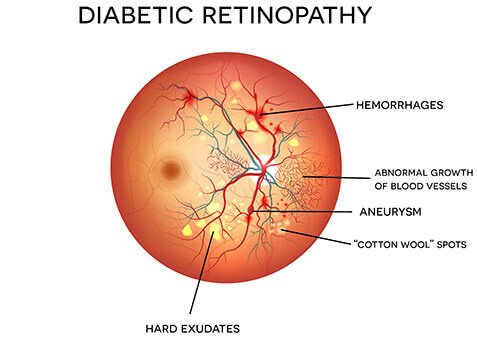
Every patient first understands their disease — Dr. Gala explains injection therapy using retinal models and your own OCT scans
2. Conditions We Treat With Eye Injections in Andheri West
| Condition | What it does to your vision | Typical injection plan |
|---|---|---|
| Diabetic macular edema (DME) | Central blur, distortion from retinal swelling — the #1 cause of vision loss in diabetics (our DME guide) | Anti-VEGF loading ×3–6, then treat-and-extend |
| Proliferative diabetic retinopathy (PDR) | Fragile new vessels → sudden bleeding, floaters (diabetic retinopathy care) | Anti-VEGF ± PRP laser (JAMA — ranibizumab vs PRP trial) |
| Wet (neovascular) AMD | Rapid central vision loss in 50+ age group (ARMD treatment) | Monthly loading ×3, then extend to 12–16 weeks with newer drugs |
| Retinal vein occlusion (BRVO/CRVO) | Sudden painless blur with retinal haemorrhages | Anti-VEGF or Ozurdex implant (2025 network meta-analysis) |
| Myopic CNV (high minus power degeneration) | Distortion, central scotoma in young high myopes | Usually 1–3 anti-VEGF injections (consensus statement) |
| Uveitis-related macular edema | Inflammatory swelling, recurrent blur | Ozurdex implant |
| Macular edema after surgery / other causes | Post-operative or inflammatory swelling (macular edema care) | Individualised drug choice |
3. Every Injection Drug, Explained Honestly — From Biosimilars to Vabysmo & Eylea HD
We stock and administer every generation of intravitreal medication — and we choose with you based on your disease activity, OCT response and budget, never on brand pressure:
💉 Biosimilar ranibizumab (Razumab, Ranieyes) — the smart-budget workhorse
India leads the world here: Razumab was the world’s first biosimilar ranibizumab, and Indian real-world studies confirm excellent safety and effectiveness at a fraction of the branded cost (Ophthalmol Ther, 2021; Razumab real-world safety, 2021; Ranieyes BRESER study, 2025; RaSER safety study). For most cost-conscious patients, this is the rational first choice.
💉 Bevacizumab (Avastin) — the original off-label option
The most widely used eye injection on earth, with Indian real-world safety data spanning years (Indian J Ophthalmol, 2017) and head-to-head equivalence with ranibizumab in the landmark CATT trial (Ophthalmology, 2012). Lowest cost per injection; requires compounding-pharmacy quality control, which we insist upon.
💉 Ranibizumab (Lucentis / Accentrix) — the proven originator
Two decades of trial evidence (EyeWiki monograph), including the DRCR.net Protocol T comparison in DME.
💉 Aflibercept 2 mg (Eylea) — the VEGF trap
Stronger VEGF binding; superior in Protocol T for patients starting with poorer vision (2-year Protocol T results; VIEW 1/2 pivotal trials; EyeWiki monograph).
💉 Aflibercept 8 mg (Eylea HD) — high-dose durability
The PHOTON trial in The Lancet proved 8 mg matches standard dosing while extending many patients to 12–16 week intervals (Lancet, 2024), with 96-week PHOTON durability now published (Ophthalmology, 2026) and clean pooled eye-pressure safety (PULSAR+PHOTON pooled IOP analysis). Trial records: PHOTON (NCT04429503), PULSAR (NCT04423718).
💉 Faricimab (Vabysmo) — the dual VEGF + Ang-2 blocker
The newest molecule in our fridge: first drug to block two leakage pathways. YOSEMITE/RHINE showed maintained vision gains with most DME patients at 12–16 week intervals over 2 years (Lancet, 2022; Ophthalmology, 2024; superior retinal drying vs aflibercept, 2025), and TENAYA/LUCERNE proved the same durability in wet AMD (Lancet, 2022; 2-year results, 2024). Now also proven in retinal vein occlusion (BALATON/COMINO, 2024). EyeWiki monograph.
💉 Brolucizumab (Beovu/Pagenax) — used selectively, with honest counselling
Powerful and long-lasting (HAWK/HARRIER, 2020), but post-marketing data revealed a small risk of retinal vasculitis (safety review, 2021; real-world systematic review, 2023; Indian multicentric experience, 2024). We discuss this transparently and reserve it for selected cases.
💉 Ozurdex (dexamethasone implant) — the 3–4 month slow-release option
A tiny biodegradable implant for DME, vein-occlusion and uveitis swelling — ideal for patients who can’t visit monthly (Retina, 2019; RVO review, 2016; uveitis review, 2019).
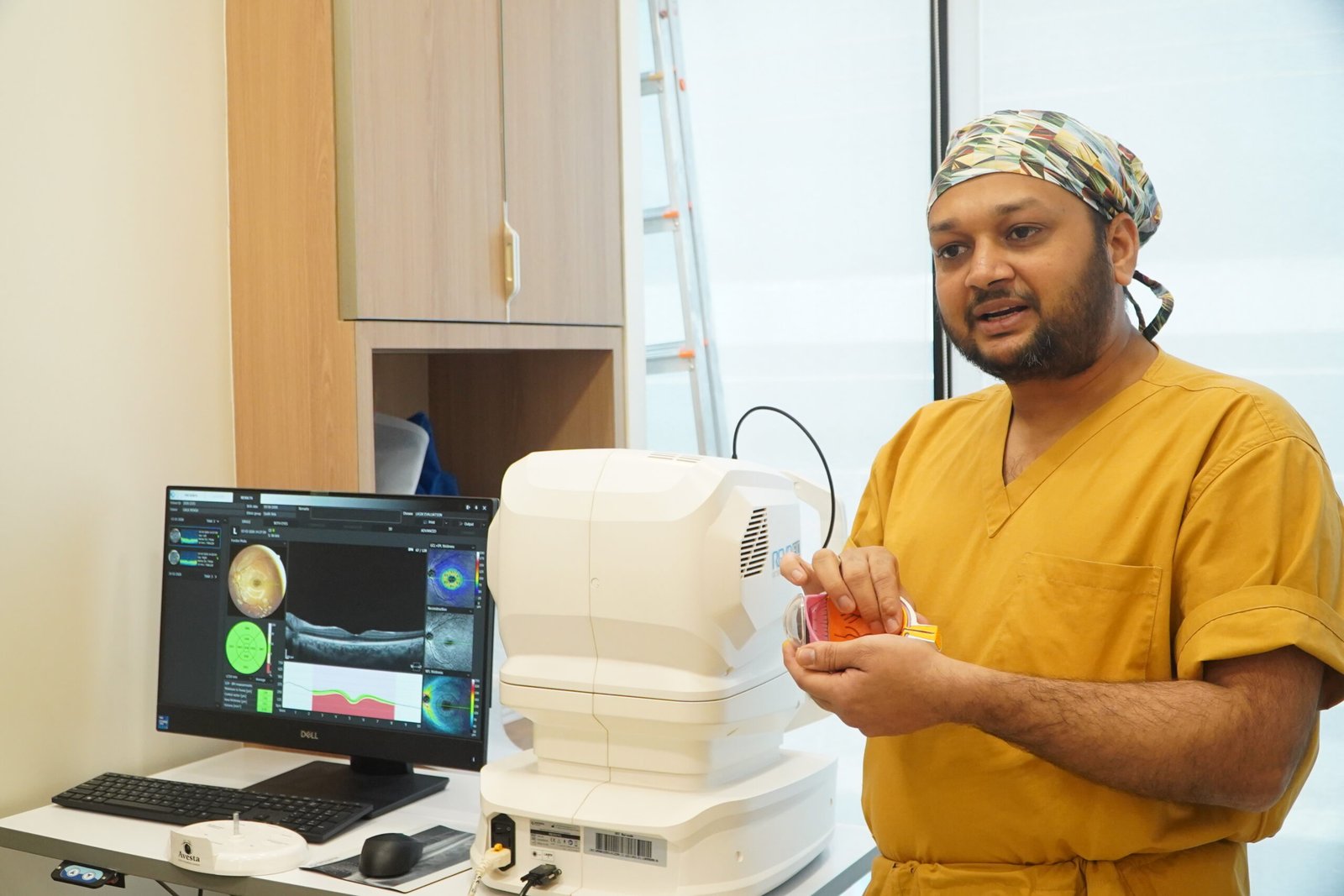
Every injection at our clinic is OCT-guided — we treat scans, not guesswork
4. Step-by-Step: Our Painless Injection Protocol (What You’ll Actually Feel)
Fear of the unknown is worse than the injection. Here’s exactly what happens in your 15-minute visit (the injection itself takes under 30 seconds):
5. Safety, Endophthalmitis Prevention & the Real Numbers
The complication everyone fears — endophthalmitis (infection inside the eye) — is genuinely rare: large meta-analyses put it at roughly 0.02–0.05% per injection (1 in 2,000–5,000) (meta-analysis, 2014; Bascom Palmer analysis, PMC; Korean J Ophthalmol, 2022). Our protocol follows the strongest evidence:
- Povidone-iodine antisepsis — proven first-line; 2025 data show it outperforms chlorhexidine for injection antisepsis (Ophthalmol Retina, 2025)
- No routine post-injection antibiotic drops — per systematic reviews showing no benefit and resistance risk (Eye, 2018; Eur J Ophthalmol, 2021)
- Strict sterile field, single-use needles, mask-on no-talking discipline during the procedure — lessons from high-volume injection-clinic safety research (Ophthalmol Retina, 2022)
- Honest drug-safety counselling — including steroid-response pressure checks after Ozurdex and inflammation vigilance with brolucizumab (Retinal Physician, 2025; EyeWiki: Endophthalmitis)
🚨 After ANY eye injection, call 077188 85245 immediately (day or night) if you get: increasing pain, worsening redness, rapidly dropping vision, or a shower of new floaters within the first 3 days. These are the warning signs of endophthalmitis — caught early, it is treatable; ignored, it is dangerous. Mild grittiness, a small red patch (subconjunctival haemorrhage) or a few bubbles in vision for a day are normal and settle on their own.
6. How Many Injections Will I Need? — Treat-and-Extend, Explained
Retinal diseases are chronic — like diabetes itself, they are controlled, not cured. The modern evidence-based approach:
- Loading phase: 3–6 monthly injections to dry the retina
- Treat-and-extend: once stable, we stretch the interval by 2 weeks at a time, guided by each OCT — the regimen backed by international consensus and meta-analyses as the best balance of vision results vs visit burden (Retina consensus recommendations; meta-analysis, 2023; systematic review, 2023)
- Typical Year-1 totals: 7–9 injections with older drugs vs 4–6 with Vabysmo/Eylea HD — the key reason long-acting drugs often cost the same per year despite higher per-injection price
Sticking to the schedule matters enormously: Indian real-world data show delayed or missed injections measurably reduce vision gains (RETORT study, 2023), and compliance research from India shows cost — not pain — is the main reason patients drop out (Indian J Ophthalmol, 2025). That’s exactly why we plan your full year, drug and budget, on day one.
7. Intravitreal Injection Cost in Andheri West, Mumbai — Transparent 2026 Table
| Drug | Per injection (₹, indicative) | Typical interval | Estimated Year-1 total (₹) |
|---|---|---|---|
| Bevacizumab (Avastin) | ₹7,000 – ₹12,000 | 4–6 weeks | ₹55,000 – ₹1,00,000 |
| Biosimilar ranibizumab (Razumab/Ranieyes) | ₹8,000 – ₹15,000 | 4–6 weeks | ₹60,000 – ₹1,20,000 |
| Ranibizumab (Accentrix/Lucentis) | ₹18,000 – ₹30,000 | 4–6 weeks | ₹1,30,000 – ₹2,40,000 |
| Aflibercept 2 mg (Eylea) | ₹25,000 – ₹40,000 | 6–8 weeks | ₹1,50,000 – ₹2,60,000 |
| Aflibercept 8 mg (Eylea HD) | ₹35,000 – ₹50,000 | 12–16 weeks | ₹1,20,000 – ₹2,00,000 |
| Faricimab (Vabysmo) | ₹45,000 – ₹65,000 | 12–16 weeks | ₹1,50,000 – ₹2,60,000 |
| Brolucizumab (Pagenax) | ₹40,000 – ₹60,000 | 8–12 weeks | ₹1,60,000 – ₹2,60,000 |
| Ozurdex implant | ₹25,000 – ₹35,000 | 3–4 months | ₹60,000 – ₹1,05,000 |
Includes injection procedure, consumables and same-day review. Exact quote after examination — your plan is written down before the first injection, so there are never surprises.
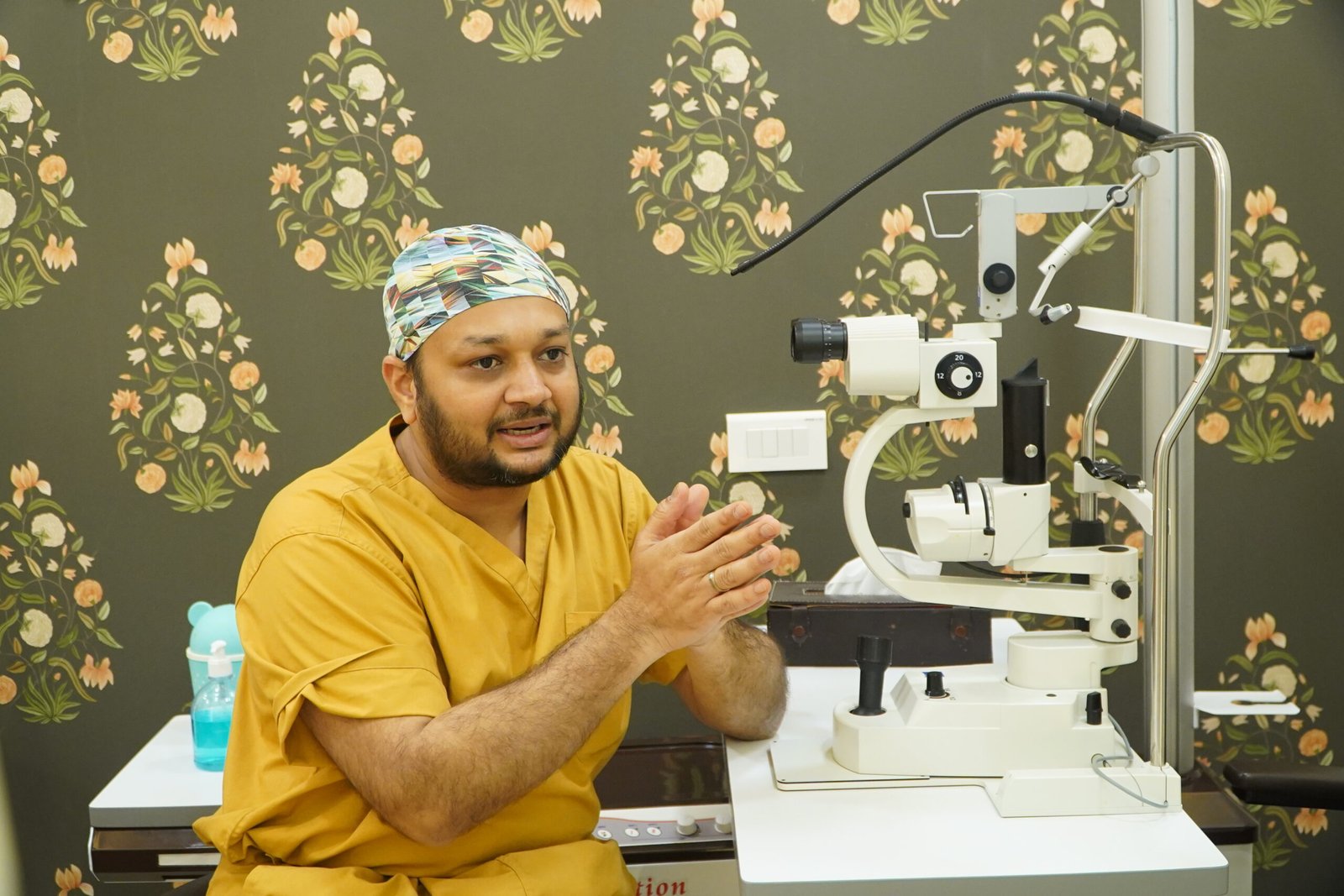
Meticulous examination before every injection — the right drug, for the right eye, at the right interval
8. Cashless Insurance for Eye Injections — Handled End-to-End
Dr. Jignesh Gala owns and directs two facilities, and between them virtually every insured patient in Mumbai is covered:
🏥 Direct cashless → Topax Eye Care (Topax Eye Hospital), Vile Parle East.
If your insurer has a direct tie-up, approval happens directly at Topax — bring your policy card, our desk coordinates pre-authorisation, and your injection proceeds without upfront payment (per policy terms).
🏥 Third-party cashless (TPA) → Crystal Clear Eye Clinic, Andheri West.
Claims routed through a TPA are processed at Crystal Clear — we work with 25–30+ TPAs and GIPSA/public-sector panels and manage paperwork, queries and billing for you.
Injection-specific insurance questions we resolve before your first dose: day-care vs OPD classification, per-injection sub-limits, diabetic waiting periods, and multi-injection annual claims — the exact pain points Indian research identifies as the #1 reason patients abandon treatment (Indian J Ophthalmol, 2025). Full process: cashless eye treatment in Mumbai | cashless guide by Dr. Gala.

The team behind your care — Crystal Clear Eye Clinic (Andheri West) & Topax Eye Hospital (Vile Parle East)
9. Why Mumbai Chooses Dr. Jignesh Gala for Intravitreal Injections
|
Dr. Jignesh Gala Vitreoretinal & Cataract Surgeon | Founder & Director — Crystal Clear Eye Clinic & Topax Eye Hospital, Mumbai
|
Anyone can push a needle; an injection is only as good as the retina specialist deciding which drug, which interval, and when to stop or switch. At our clinic every injection is personally planned and administered by Dr. Gala — never delegated, never on autopilot — with OCT evidence guiding each decision. Explore: best retina specialist in Mumbai · retina specialist profile · retina treatment in Andheri · advanced retinal care · eye specialist in Andheri · watch him operate. Related reading: vitreoretinal treatment in Andheri, complete guide to retina surgery, vitrectomy surgery in Mumbai, sudden floaters — retina check-up and diabetic eye care in Mumbai.
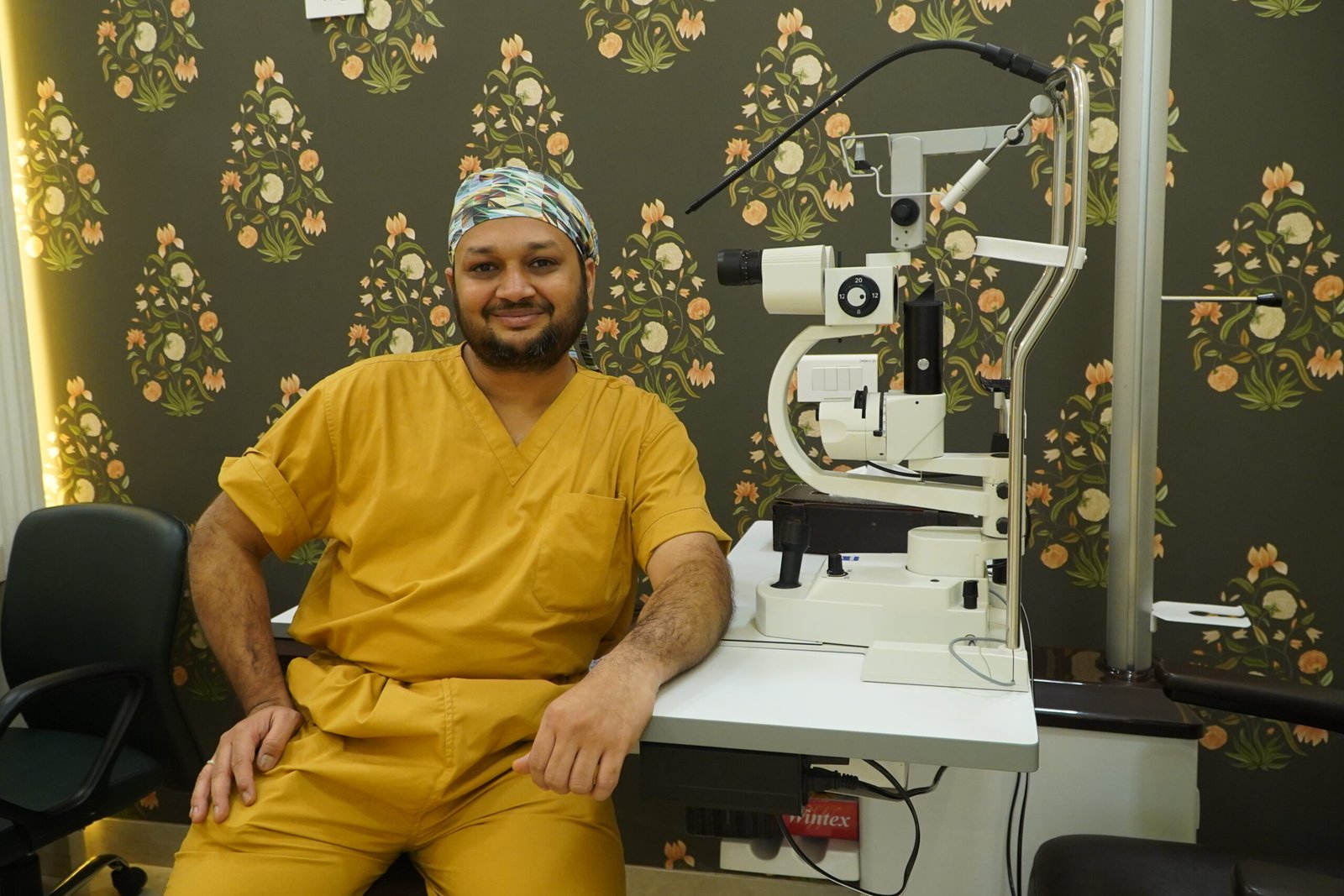
Surgeon-grade precision in everything — from a 30-second injection to complex vitrectomy
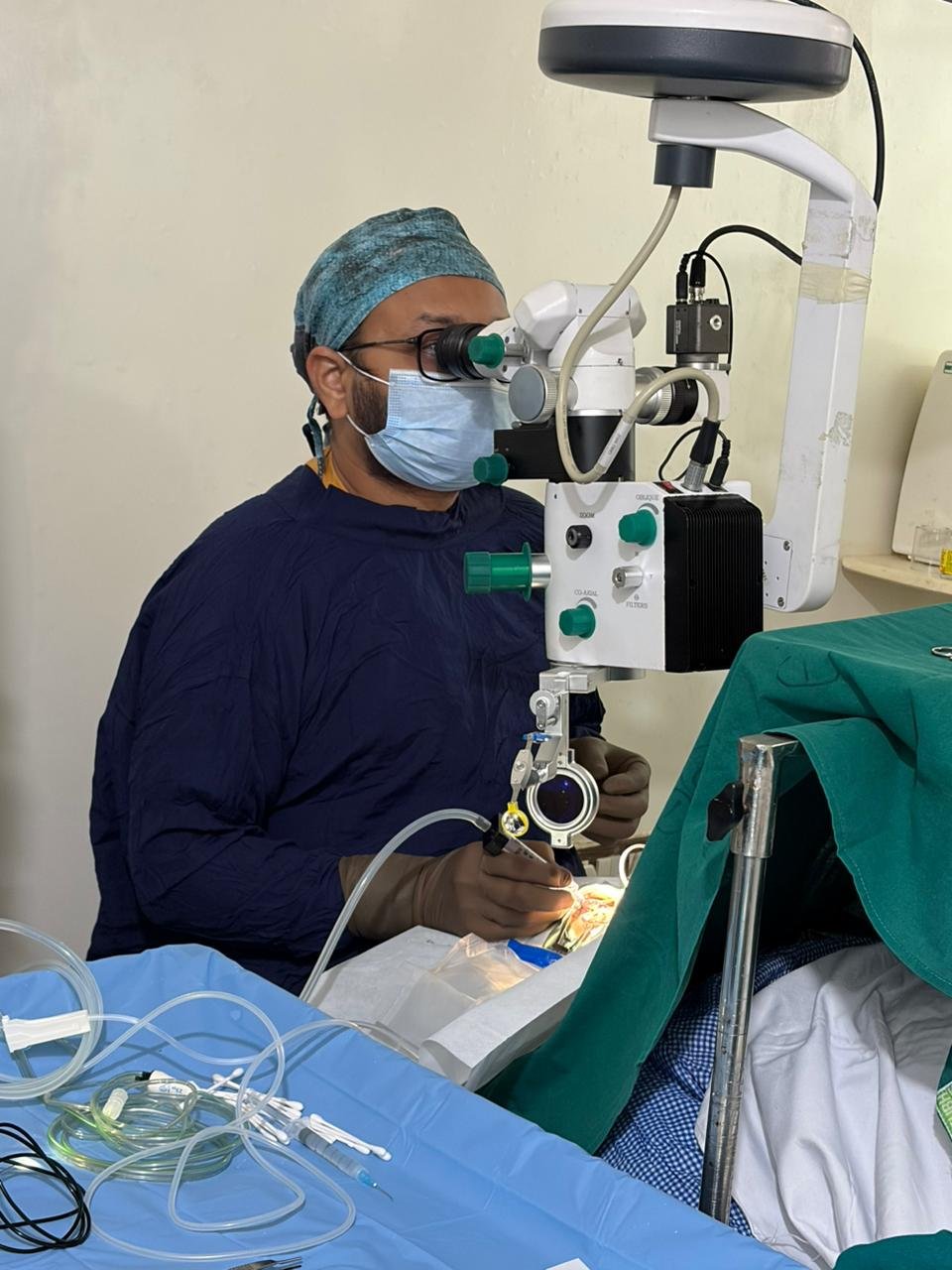
Our operation theatre at Topax Eye Hospital — microscope-integrated HD visualisation
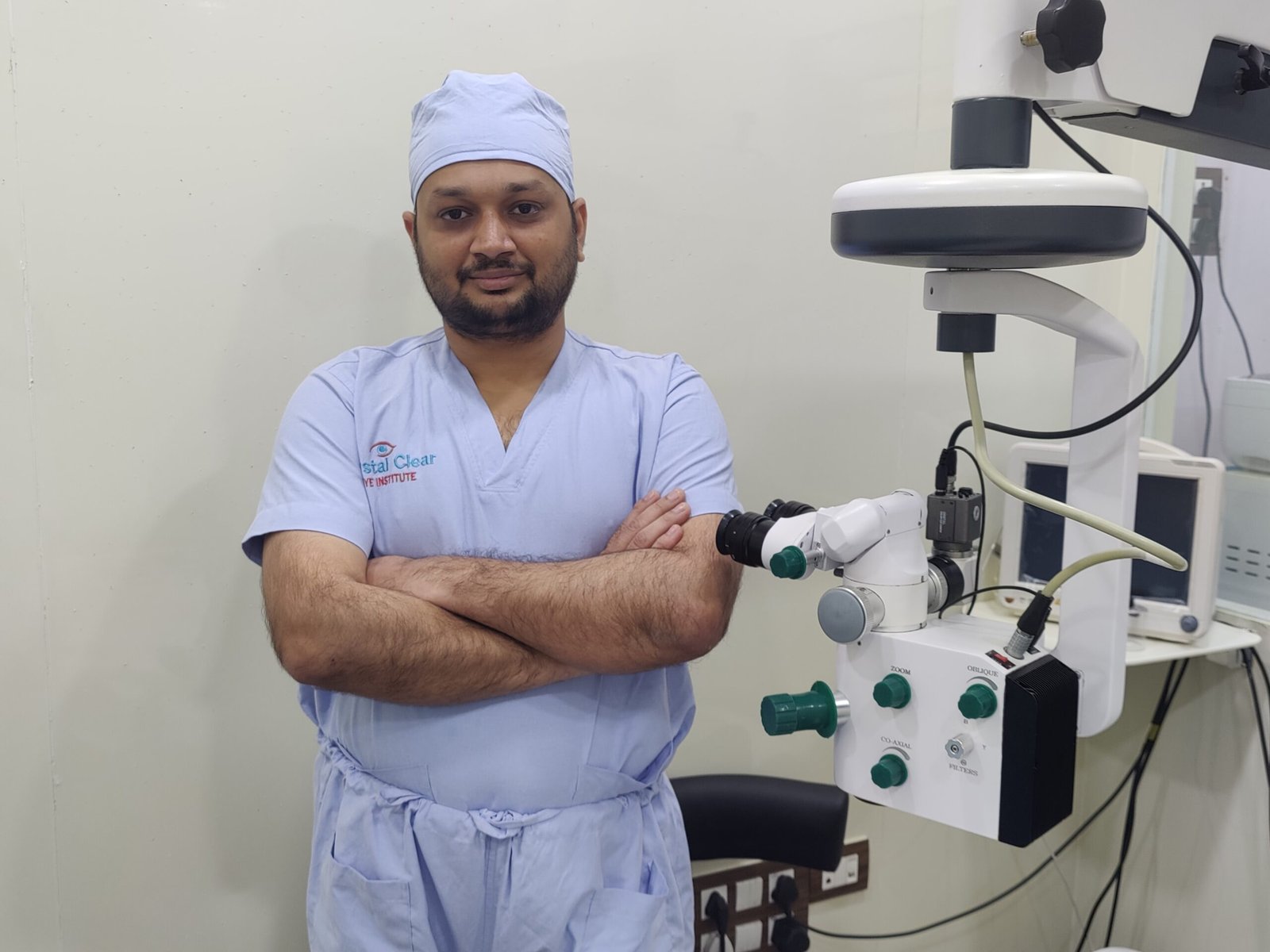
Sterile discipline is a habit here — every injection follows operation-theatre protocol
10. Practising at the Edge of the Latest Research — Not Decade-Old Protocols
Injection therapy evolves every single year — new molecules, new dosing science, new safety data. Yet many practitioners still inject by habit, following protocols from a decade ago. Dr. Gala works differently. As an active BMJ peer reviewer, evaluating new research is literally his routine job — and it shows in this page: the 200+ verified references below (YOSEMITE/RHINE, PHOTON, PULSAR, TENAYA/LUCERNE, HAWK/HARRIER, Protocol T, CATT, 2025–2026 real-world Indian studies) are the same evidence that shapes your treatment plan. When a longer-acting drug will genuinely save you injections — or a cheaper biosimilar will serve you equally well — you hear it honestly, backed by data, not marketing.
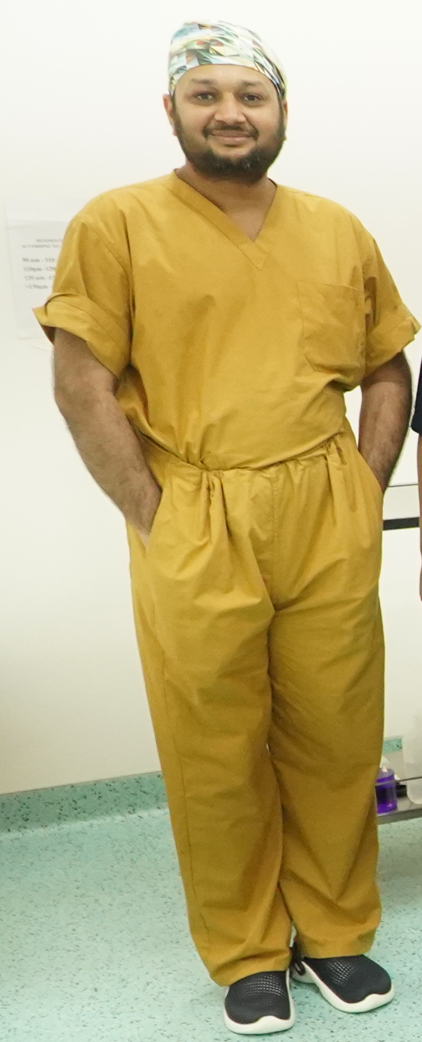
Operation-theatre discipline in every procedure — hospital-grade protocol, clinic comfort
11. Reaching Us — Andheri West, Lokhandwala, Versova, Juhu, Vile Parle & Beyond
Crystal Clear Eye Clinic is on S.V. Road in the heart of Andheri West:
- Lokhandwala / Four Bungalows / Seven Bungalows — 5–8 min
- Versova / Yari Road / DN Nagar — 8–10 min (DN Nagar & Versova Metro, Line 2A)
- Juhu / JVPD — 10–12 min
- Vile Parle West & East — 10 min (Topax Eye Care, our direct-cashless facility, is in Vile Parle East)
- Oshiwara / Jogeshwari / Goregaon — 12–15 min via Link Road
- Andheri Station (West) — short rickshaw ride; landmark: NADCO Shopping Centre
- Regular injection patients also visit from Bandra, Santacruz, Khar, Malad, Kandivali, Powai and South Mumbai

Dr. Gala at our Topax facility — one team, two locations, every injection protocol identical
Address: Laram Centre CHS, A1-202, Swami Vivekanand Rd, above Sunil Jewellers, near NADCO Shopping Centre, Railway Colony, Andheri West, Mumbai, Maharashtra 400058
Hours: Open daily · Closes 9 pm (perfect for working professionals — inject after office, back home for dinner)
Phone / WhatsApp: 077188 85245 · Web: drjigneshgalaeye.com | crystalcleareye.in
मराठी सारांश: डोळ्यातील इंजेक्शन (इंट्राव्हिट्रियल इंजेक्शन) ही ५ मिनिटांची वेदनारहित प्रक्रिया आहे — मधुमेह, वयानुसार मॅक्युलर डिजेनेरेशन किंवा नस दाबल्यामुळे सुजलेल्या रेटिनासाठी. अंधेरी पश्चिम येथे डॉ. जिग्नेश गाला (FRCS) Vabysmo, Eylea HD, Ozurdex व स्वस्त biosimilar इंजेक्शन्स OCT मार्गदर्शनाने स्वतः देतात. टोपॅक्स आई केयरमधून डायरेक्ट कॅशलेस व क्रिस्टल क्लियर आयमधून TPA कॅशलेस उपलब्ध. पत्ता: लाराम सेंटर, एस.व्ही. रोड, अंधेरी पश्चिम. फोन: 077188 85245.
हिंदी सारांश: आँख का इंजेक्शन (इंट्राविट्रियल इंजेक्शन) 5 मिनट की बिल्कुल बेदर्द प्रक्रिया है — डायबिटीज़, AMD या रेटिना की नसों की बीमारी में रेटिना की सूजन घटाने के लिए। अंधेरी वेस्ट में डॉ. जिग्नेश गाला (FRCS) नवीनतम इंजेक्शन (Vabysmo, Eylea HD, Ozurdex, biosimilar) OCT के साथ स्वयं लगाते हैं। टोपॅक्स आई केयर से डायरेक्ट कैशलेस और क्रिस्टल क्लियर आई से TPA कैशलेस उपलब्ध। फोन: 077188 85245.
12. FAQs — Intravitreal Injection in Andheri West, Mumbai
Is an intravitreal (eye) injection painful?
No. With proper anaesthetic drops, most patients rate pain 1–2 out of 10 and say “that’s it?” The injection itself takes seconds. Anxiety is normal on the first visit and disappears by the second or third.
What is the cost of an eye injection in Andheri West, Mumbai?
₹7,000–₹65,000 per injection depending on the drug — biosimilars (Razumab/Ranieyes) are most economical; Vabysmo and Eylea HD cost more per injection but need far fewer injections per year. You receive a written Year-1 plan with exact costs before starting.
Who is the best doctor for intravitreal injections in Andheri West, Mumbai?
Dr. Jignesh Gala (FRCS Glasgow, LVPEI-trained vitreoretinal surgeon) at Crystal Clear Eye Clinic, S.V. Road, Andheri West, personally plans and administers every injection with OCT guidance — with thousands of injections given across India and Singapore. Call 077188 85245.
How many injections will I need in total?
Typically 3–6 monthly injections first (loading phase), then intervals are stretched with treat-and-extend — many patients on Vabysmo or Eylea HD stabilise at one injection every 3–4 months. Retinal diseases are controlled, not cured, so periodic treatment continues.
Avastin vs Eylea vs Vabysmo — which injection is best for me?
It depends on your diagnosis, OCT findings, starting vision and budget. Avastin/biosimilars are excellent value; Eylea-class drugs bind VEGF more strongly; Vabysmo blocks two pathways and lasts longest. We decide together after examining your scans — never by brand hype.
Is the injection covered by insurance / cashless?
Usually yes, as a day-care procedure. Direct cashless is processed through Topax Eye Care (Vile Parle East) and third-party/TPA cashless through Crystal Clear Eye Clinic (Andheri West). We verify sub-limits and waiting periods before your first injection.
What are the risks or side effects?
Common and harmless: surface redness, grittiness, a few floaters or bubbles for a day. Rare but serious: endophthalmitis infection (about 1 in 2,000–5,000 injections) — our sterile Betadine-first protocol minimises this, and we give you a written warning-sign sheet after every injection.
Can both eyes be injected on the same day?
Yes, bilateral same-day injections are routinely done worldwide with separate sterile setups for each eye. It saves visits for diabetic patients needing treatment in both eyes.
Can I go to work after an eye injection?
Most patients resume routine work the same or next day. Avoid rubbing the eye, swimming and dusty environments for 24–48 hours. Your vision may be briefly blurry from dilatation on injection day.
What happens if I miss a scheduled injection?
Retinal swelling can return quickly — Indian real-world studies show delayed injections reduce final vision gains. If cost or travel is a problem, tell us: we can switch drugs, extend intervals safely, or restructure the plan rather than abandon treatment.
Do you inject children or ROP babies?
Anti-VEGF injections are also used for retinopathy of prematurity in premature babies (RAINBOW trial evidence). Dr. Gala trained in ROP management at LV Prasad Eye Institute — bring the baby for evaluation and we will guide you compassionately.
Where exactly is the clinic, and is parking available?
Laram Centre CHS, A1-202, Swami Vivekanand Rd, above Sunil Jewellers, near NADCO Shopping Centre, Railway Colony, Andheri West, Mumbai 400058 — 5–12 minutes from Lokhandwala, Versova, Juhu, Vile Parle and Jogeshwari. Open daily till 9 pm. Call 077188 85245.
Book Your Painless Eye Injection — Same-Week Slots
Crystal Clear Eye Clinic — Laram Centre CHS, A1-202, Swami Vivekanand Rd, above Sunil Jewellers, near NADCO Shopping Centre, Railway Colony, Andheri West, Mumbai, Maharashtra 400058 · Open daily, closes 9 pm
📞 Call 077188 85245 💬 WhatsApp Appointment
Direct cashless via Topax Eye Care · Third-party (TPA) cashless via Crystal Clear Eye Clinic
Medical disclaimer: This article is for patient education and does not replace a personal consultation. Drug choice and intervals are individualised after examination. If you experience severe pain, redness or sudden vision drop after an injection, seek same-day eye care.
15. Research & Evidence Library — 200+ Verified References
Transparency is part of our protocol. Every claim on this page is backed by the sources below — each link verified live. Browse by topic; patients and referring doctors are welcome to ask us about any of these studies.
🏛️ Global Authorities, Guidelines & Trial Registries (40 verified links)
AAO (aao.org) — 7 links
- AAO: Anti-VEGF Treatments — Plain-language explainer of what anti-VEGF eye injections are, conditions treated, and what to expect during the shot.
- AAO: Diabetic Retinopathy: Causes, Symptoms, Treatment — Patient guide to diabetic eye disease stages, diagnosis (OCT), and treatments including anti-VEGF injections.
- AAO: Understanding Macular Degeneration — Patient overview of dry vs wet AMD, AREDS2 vitamins, anti-VEGF therapy, and Amsler grid self-monitoring.
- AAO: Retinal Vein Occlusion — Explains BRVO vs CRVO, macular edema, and anti-VEGF/laser treatment options for patients.
- AAO: Diabetic Retinopathy PPP 2024 — AAO's official evidence-based clinical guideline for diabetic retinopathy care (free PDF).
- AAO: Age-Related Macular Degeneration PPP 2024 (Updated 2026) — AAO's official AMD clinical guideline, including anti-VEGF treatment recommendations.
- AAO: Retinal Vein Occlusions PPP 2024 (Updated 2026) — AAO's official RVO clinical guideline covering anti-VEGF agents and aflibercept 8 mg.
EyeWiki (eyewiki.org) — 5 links
- EyeWiki: Intravitreal Injections — Physician-reviewed reference on injection technique, indications, and complications.
- EyeWiki: Aflibercept — Drug monograph on Eylea: mechanism, dosing, trial evidence.
- EyeWiki: Ranibizumab — Drug monograph on Lucentis: mechanism, indications, key trials.
- EyeWiki: Faricimab — Drug monograph on Vabysmo, the dual VEGF/Ang-2 inhibitor.
- EyeWiki: Endophthalmitis — Reference on the most serious injection complication: signs, management, prognosis.
ASRS (asrs.org) — 5 links
- ASRS: Retina Health Series: Intravitreal Injections (fact sheet 30, PDF) — Patient fact sheet on what happens during an eye injection and its risks.
- ASRS: Retina Health Series: Age-Related Macular Degeneration (fact sheet 16, PDF) — Patient fact sheet on AMD symptoms, testing, and anti-VEGF treatment regimens.
- ASRS: Retina Health Series: Macular Edema (fact sheet 13, PDF) — Patient fact sheet on macular edema causes (incl. diabetes/DME) and treatments.
- ASRS: Retina Health Series: Central Retinal Vein Occlusion (fact sheet 21, PDF) — Patient fact sheet on CRVO and its anti-VEGF/laser management.
- ASRS: Diabetic Retinopathy (patient disease page) — ASRS patient portal page on diabetic retinopathy symptoms, causes, and treatments.
Retinal Physician (retinalphysician.com) — 3 links
- Retinal Physician: Comparing Intravitreal Injection Protocols and Practices (Sept 2010) — Expert roundtable on injection technique nuances: anesthesia, asepsis, needle handling, post-op care.
- Retinal Physician: Antisepsis for Intravitreal Injections (April 2023) — How povidone-iodine antisepsis lowers endophthalmitis risk from injections.
- Retinal Physician: Endophthalmitis Then and Now (May 2025) — Historical-to-modern review of endophthalmitis prophylaxis and management.
Landmark journal article pages (DOI-resolving) — 6 links
- Ophthalmology (AAO journal): Heier JS et al. — Intravitreal Aflibercept (VEGF Trap-Eye) in Wet AMD (VIEW 1/VIEW 2), 2012 — Pivotal trials that established aflibercept 2 mg for wet AMD.
- Ophthalmology: Dugel PU et al. — HAWK and HARRIER: Phase 3 Trials of Brolucizumab for nAMD, 2020 — Trials leading to brolucizumab (Beovu) approval.
- Lancet: Heier JS et al. — Faricimab in nAMD (TENAYA and LUCERNE), 2022 — Showed faricimab durability up to 16-week intervals in wet AMD.
- Lancet: Wykoff CC et al. — Faricimab in DME (YOSEMITE and RHINE), 2022 — Pivotal faricimab trials in diabetic macular edema.
- Ophthalmology: CATT Research Group — Ranibizumab and Bevacizumab for nAMD: Two-Year Results, 2012 — Head-to-head comparison of Lucentis vs Avastin for wet AMD.
- Ophthalmology: Wells JA et al. (DRCR.net Protocol T) — Aflibercept, Bevacizumab, or Ranibizumab for DME, 2016 — Comparative-effectiveness trial guiding anti-VEGF choice in DME.
ClinicalTrials.gov (all confirmed via official v2 API) — 10 links
- ClinicalTrials.gov: YOSEMITE — Faricimab in DME (COMPLETED) — Phase 3 faricimab trial in diabetic macular edema.
- ClinicalTrials.gov: RHINE — Faricimab in DME (COMPLETED) — Sister phase 3 faricimab DME trial (official title: "A Study to Evaluate the Efficacy and Safety of Faricimab (RO6867461) in Participants With Diabetic Macular Edema").
- ClinicalTrials.gov: PHOTON — Aflibercept 8 mg in DME (COMPLETED) — Phase 3 high-dose aflibercept in diabetic eye disease.
- ClinicalTrials.gov: PULSAR — Aflibercept 8 mg in wet AMD (COMPLETED) — Phase 3 high-dose aflibercept in neovascular AMD.
- ClinicalTrials.gov: TENAYA — Faricimab in nAMD (COMPLETED) — Phase 3 faricimab in neovascular AMD.
- ClinicalTrials.gov: LUCERNE — Faricimab in nAMD (COMPLETED) — Sister phase 3 faricimab nAMD trial.
- ClinicalTrials.gov: HAWK — Brolucizumab (RTH258) vs aflibercept, Study 1 (COMPLETED) — Phase 3 brolucizumab trial in wet AMD.
- ClinicalTrials.gov: HARRIER — Brolucizumab (RTH258) vs aflibercept, Study 2 (COMPLETED) — Sister phase 3 brolucizumab trial.
- ClinicalTrials.gov: Archway — Port Delivery System (Susvimo) with ranibizumab, wet AMD (COMPLETED) — Phase 3 refillable ranibizumab implant vs monthly injections.
- ClinicalTrials.gov: VIEW 1 — VEGF Trap-Eye (aflibercept) in wet AMD (COMPLETED) — Pivotal aflibercept wet AMD trial.
NEI (nei.nih.gov) — 2 links
- NEI: Age-Related Macular Degeneration — NIH patient resource on AMD types, risk factors, and treatment.
- NEI: Diabetic Retinopathy — NIH patient resource on diabetic eye disease and injections/laser/surgery.
MedlinePlus — 2 links
- MedlinePlus: Macular Degeneration — Curated NIH patient information hub on AMD.
- MedlinePlus: Diabetic Eye Problems — Patient hub on diabetic retinopathy and related eye complications.
📚 PubMed & PubMed Central — Peer-Reviewed Studies (189 verified links)
Intravitreal Injection Technique & Safety
- Intravitreal aflibercept (VEGF trap-eye) in wet age-related macular degeneration. Ophthalmology, 2012.
- Intravitreal Injection–Technique and Safety. Asia-Pacific journal of ophthalmology (Philadelphia, Pa.), 2015.
- Efficacy and safety of avacincaptad pegol in patients with geographic atrophy (GATHER2): 12-month results from a randomised, double-masked, phase 3 trial. Lancet (London, England), 2023.
- Improving Patient Safety in a High-Volume Intravitreal Injection Clinic. Ophthalmology. Retina, 2022.
- Efficacy and Safety of Intravitreal Aflibercept for Polypoidal Choroidal Vasculopathy in the PLANET Study: A Randomized Clinical Trial. JAMA ophthalmology, 2018.
- C5 Inhibitor Avacincaptad Pegol for Geographic Atrophy Due to Age-Related Macular Degeneration: A Randomized Pivotal Phase 2/3 Trial. Ophthalmology, 2021.
- HAWK and HARRIER: Phase 3, Multicenter, Randomized, Double-Masked Trials of Brolucizumab for Neovascular Age-Related Macular Degeneration. Ophthalmology, 2020.
- Assessment of the safety of intravitreal injection of metoprolol tartrate in rabbits. Documenta ophthalmologica. Advances in ophthalmology, 2021.
- Regarding "Intravitreal Injection–Technique and Safety". Asia-Pacific journal of ophthalmology (Philadelphia, Pa.), 2016.
- Intravitreal Aflibercept for Diabetic Macular Edema: 148-Week Results from the VISTA and VIVID Studies. Ophthalmology, 2016.
Endophthalmitis After Intravitreal Injection
- Endophthalmitis. Clinical microbiology and infection : the official publication of the European Society of Clinical Microbiology and Infectious Diseases, 2013.
- Differential diagnosis of endophthalmitis after intravitreal drug injection for age related macular degeneration: sterile vs. infectious. Archivos de la Sociedad Espanola de Oftalmologia, 2023.
- Antibiotic prophylaxis for preventing endophthalmitis after intravitreal injection: a systematic review. Eye (London, England), 2018.
- Sterile endophthalmitis after intravitreal injection of triamcinolone acetonide: case report and literature review. Romanian journal of ophthalmology, 2024.
- Noninfectious Intraocular Inflammation After Intravitreal Aflibercept. JAMA ophthalmology, 2025.
- Meta-analysis of infectious endophthalmitis after intravitreal injection of anti-vascular endothelial growth factor agents. Ophthalmic surgery, lasers & imaging retina, 2014.
- Incidence of endophthalmitis after intravitreal injection with and without topical antibiotic prophylaxis. European journal of ophthalmology, 2021.
- Endophthalmitis Incidence after Intravitreal Injection of Anti-VEGF Agents with Povidone-Iodine versus Aqueous Chlorhexidine Antisepsis. Ophthalmology. Retina, 2025.
- Endophthalmitis after intravitreal injections. Expert opinion on pharmacotherapy, 2009.
- ACTINOMYCES NEUII ENDOPHTHALMITIS AFTER INTRAVITREAL ANTI-VASCULAR ENDOTHELIAL GROWTH FACTOR INJECTION. Retinal cases & brief reports, 2017.
Intravitreal Injection Pain, Anxiety & Anesthesia
- Topical anesthesia for intravitreal injection. Expert opinion on drug delivery, 2012.
- Cooling Anesthesia for Intravitreal Injections – A Review. Clinical ophthalmology (Auckland, N.Z.), 2023.
- Experiences of patients undergoing anti-VEGF treatment for neovascular age-related macular degeneration: a systematic review. Psychology, health & medicine, 2015.
- Effects of music therapy on intravitreal injections: a randomised clinical trial. Singapore medical journal, 2025.
- Anesthesia for Intravitreal Injection: A Systematic Review. Clinical ophthalmology (Auckland, N.Z.), 2020.
- Comparison of topical and subconjunctival anesthesia in intravitreal injection administrations. European journal of ophthalmology, 2006.
- Patient pain during intravitreal injections under topical anesthesia: a systematic review. International journal of retina and vitreous, 2017.
- Pain control and subconjunctival haemorrhage after intravitreal injection using cooled anaesthetic eyedrops and antiseptics: A prospective, double-blind, randomized controlled trial. Acta ophthalmologica, 2024.
- Safety and efficacy of various topical anesthesia for intravitreal injection: a randomized controlled trial. International ophthalmology, 2026.
- Quadrant-Specific Pain in Intravitreal Injection: A Systematic Review and Meta-analysis. Ophthalmology and therapy, 2026.
Ranibizumab For Diabetic Macular Edema
- Persistent diabetic macular edema: Definition, incidence, biomarkers, and treatment methods. Survey of ophthalmology, 2023.
- Intravitreal Ranibizumab in Diabetic Macular Edema: Long-Term Outcomes. Developments in ophthalmology, 2017.
- Ranibizumab in Diabetic Retinopathy with or without Diabetic Macular Edema. Ophthalmology. Retina, 2020.
- Aflibercept versus Faricimab in the Treatment of Neovascular Age-Related Macular Degeneration and Diabetic Macular Edema: A Review. International journal of molecular sciences, 2022.
- Comparative Efficacy, Durability and Safety of Faricimab in the Treatment of Diabetic Macular Edema: A Systematic Literature Review and Network Meta-Analysis. Advances in therapy, 2023.
- Diabetic macular edema. Developments in ophthalmology, 2010.
- Systemic safety of ranibizumab for diabetic macular edema: meta-analysis of randomized trials. Retina (Philadelphia, Pa.), 2014.
- Race and Vision Outcomes in Ranibizumab-Treated Participants With Diabetic Macular Edema: A Meta-Analysis. JAMA ophthalmology, 2025.
- [Recommendations for the use of ranibizumab in diabetic macular edema at IMSS]. Revista medica del Instituto Mexicano del Seguro Social, 2017.
- Baseline Diabetic Retinopathy Severity and Time to Diabetic Macular Edema Resolution with Ranibizumab Treatment: A Meta-Analysis. Ophthalmology. Retina, 2023.
Aflibercept For Diabetic Macular Edema
- Faricimab Treat-and-Extend for Diabetic Macular Edema: Two-Year Results from the Randomized Phase 3 YOSEMITE and RHINE Trials. Ophthalmology, 2024.
- IMPACT OF FARICIMAB VERSUS AFLIBERCEPT ON EPIRETINAL MEMBRANE FORMATION OVER 2 YEARS IN PATIENTS WITH DIABETIC MACULAR EDEMA IN THE PHASE 3 YOSEMITE AND RHINE TRIALS. Retina (Philadelphia, Pa.), 2025.
- Aflibercept versus ranibizumab for diabetic macular edema: A meta-analysis. European journal of ophthalmology, 2024.
- Aflibercept, Bevacizumab, or Ranibizumab for Diabetic Macular Edema: Two-Year Results from a Comparative Effectiveness Randomized Clinical Trial. Ophthalmology, 2016.
- Clinical trials and real-world studies examining faricimab and high-dose aflibercept for wet age-related macular degeneration and diabetic macular edema. Current opinion in ophthalmology, 2025.
- Intravitreal Aflibercept 8 mg for Diabetic Macular Edema: Ninety-Six-Week Results from the Randomized Phase 2/3 PHOTON Trial. Ophthalmology, 2026.
- Intravitreal aflibercept 8 mg in diabetic macular oedema (PHOTON): 48-week results from a randomised, double-masked, non-inferiority, phase 2/3 trial. Lancet (London, England), 2024.
- Aflibercept Monotherapy or Bevacizumab First for Diabetic Macular Edema. The New England journal of medicine, 2022.
- Anatomic Control with Faricimab versus Aflibercept in the YOSEMITE/RHINE Trials in Diabetic Macular Edema. Ophthalmology. Retina, 2025.
- Five-Year Outcomes after Initial Aflibercept, Bevacizumab, or Ranibizumab Treatment for Diabetic Macular Edema (Protocol T Extension Study). Ophthalmology, 2020.
Faricimab (Vabysmo) Trials
- Efficacy, durability, and safety of intravitreal faricimab up to every 16 weeks for neovascular age-related macular degeneration (TENAYA and LUCERNE): two randomised, double-masked, phase 3, non-inferiority trials. Lancet (London, England), 2022.
- TENAYA and LUCERNE: Two-Year Results from the Phase 3 Neovascular Age-Related Macular Degeneration Trials of Faricimab with Treat-and-Extend Dosing in Year 2. Ophthalmology, 2024.
- Efficacy, durability, and safety of intravitreal faricimab with extended dosing up to every 16 weeks in patients with diabetic macular oedema (YOSEMITE and RHINE): two randomised, double-masked, phase 3 trials. Lancet (London, England), 2022.
- Four-Year Outcomes of Faricimab in Diabetic Macular Edema: Results from the RHONE-X Extension Trial. Ophthalmology, 2026.
- Simultaneous Inhibition of Angiopoietin-2 and Vascular Endothelial Growth Factor-A with Faricimab in Diabetic Macular Edema: BOULEVARD Phase 2 Randomized Trial. Ophthalmology, 2019.
- Efficacy and Safety of Faricimab for Macular Edema due to Retinal Vein Occlusion: 24-Week Results from the BALATON and COMINO Trials. Ophthalmology, 2024.
- Anatomic Outcomes with Faricimab vs Aflibercept in Head-to-Head Dosing Phase of the TENAYA/LUCERNE Trials in Neovascular Age-related Macular Degeneration. Ophthalmology, 2025.
- Faricimab Treat-and-Extend Dosing for Macular Edema Due to Retinal Vein Occlusion: 72-Week Results from the BALATON and COMINO Trials. Ophthalmology. Retina, 2025.
- Faricimab for neovascular age-related macular degeneration and diabetic macular edema: from preclinical studies to phase 3 outcomes. Graefe's archive for clinical and experimental ophthalmology = Albrecht von Graefes Archiv fur klinische und experimentelle Ophthalmologie, 2024.
Aflibercept 8 Mg (Photon / Pulsar)
- Aflibercept 8 mg versus Faricimab Treat-and-Extend for Diabetic Macular Edema or Neovascular Age-Related Macular Degeneration: A Bayesian Fixed-Effect Network Meta-analysis of Clinical Trials. Ophthalmology and therapy, 2025.
- A Matching-Adjusted Comparison of Faricimab and Aflibercept 8 mg in Neovascular Age-Related Macular Degeneration and Diabetic Macular Edema. Ophthalmic research, 2026.
- Economic Benefit of Aflibercept 8 mg Versus Faricimab for Neovascular Age-Related Macular Degeneration or Diabetic Macular Edema in the US. Ophthalmology and therapy, 2025.
- Intraocular Pressure Outcomes with Intravitreal Aflibercept 8 mg: A 96-Week Pooled Analysis from PULSAR and PHOTON. Ophthalmology and therapy, 2026.
- A Response to: Letter to the Editor Regarding "Aflibercept 8 mg Versus Faricimab Treat-and-Extend for Diabetic Macular Edema or Neovascular Age-Related Macular Degeneration: A Bayesian Fixed-Effect Network Meta-analysis of Clinical Trials". Ophthalmology and therapy, 2026.
- Effect of High-Dose Intravitreal Aflibercept, 8 mg, in Patients With Neovascular Age-Related Macular Degeneration: The Phase 2 CANDELA Randomized Clinical Trial. JAMA ophthalmology, 2023.
- High-Dose 8 mg Aflibercept for Neovascular Age-Related Macular Degeneration: Who Is Being Treated with This New Agent? Life (Basel, Switzerland), 2025.
- Aflibercept high-dose (8mg) related intraocular inflammation (IOI) – a case series. BMC ophthalmology, 2024.
- Clinical Outcomes of High-Dose Aflibercept 8 mg in Polypoidal Choroidal Vasculopathy: A Systematic Review and Meta-Analysis. Cureus, 2026.
- Initial Functional and Anatomical Outcomes of High-dose Aflibercept 8 mg in Exudative Neovascular Age-related Macular Degeneration. Ophthalmology. Retina, 2025.
Brolucizumab
- Risk of Inflammation, Retinal Vasculitis, and Retinal Occlusion-Related Events with Brolucizumab: Post Hoc Review of HAWK and HARRIER. Ophthalmology, 2021.
- Understanding Retinal Vasculitis Associated with Brolucizumab: Complex Pathophysiology or Occam's Razor? Ocular immunology and inflammation, 2022.
- [Efficacy of brolucizumab in the treatment of retinal pathologies: a review of post-marketing studies]. Vestnik oftalmologii, 2024.
- RETINAL VASCULITIS OR VASCULAR OCCLUSION AFTER BROLUCIZUMAB FOR NEOVASCULAR AGE-RELATED MACULAR DEGENERATION: A Systematic Review of Real-World Evidence. Retina (Philadelphia, Pa.), 2023.
- EXUDATIVE RETINAL DETACHMENT AFTER INTRAVITREAL BROLUCIZUMAB INJECTION. Retinal cases & brief reports, 2023.
- Retinal vasculitis after intravitreal injection of brolucizumab. Canadian journal of ophthalmology. Journal canadien d'ophtalmologie, 2022.
- Retinal Vasculitis and Intraocular Inflammation after Intravitreal Injection of Brolucizumab. Ophthalmology, 2020.
- Brolucizumab-associated intraocular inflammation in eyes without retinal vasculitis. Journal of vitreoretinal diseases, 2021.
- Occlusive Retinal Vasculitis Following Intravitreal Brolucizumab. Journal of vitreoretinal diseases, 2020.
- KESTREL and KITE: 52-Week Results From Two Phase III Pivotal Trials of Brolucizumab for Diabetic Macular Edema. American journal of ophthalmology, 2022.
Ranibizumab Biosimilars
- Approved biosimilar ranibizumab-a global update. Eye (London, England), 2023.
- Comparison Between Ranibizumab Biosimilar, Innovator Ranibizumab and Bevacizumab in a Real-World Situation. Ophthalmology and therapy, 2022.
- Biosimilar ranibizumab interchangeability: what does it mean to retinal physicians? Eye (London, England), 2023.
- Biosimilar Ranibizumab (Ranieyes) Safety and Efficacy in the Real World: BRESER Study. Journal of vitreoretinal diseases, 2025.
- Biosimilar ranibizumab (BS1) – early experience from Japan (BRIJ study). Eye (London, England), 2024.
- Treatment Landscape of Macular Disorders in Indian Patients with the Advent of Razumab™ (World's First Biosimilar Ranibizumab): A Comprehensive Review. Ophthalmology and therapy, 2021.
- Biosimilar ranibizumab in India- overview of phase 3 clinical trial designs. Eye (London, England), 2024.
- Innovator Versus Biosimilar Ranibizumab in Polypoidal Choroidal Vasculopathy: Real-World Evidence. Ophthalmology and therapy, 2022.
- FYB-201 Biosimilar ranibizumab (Ongavia/Ranivisio/Cimerli) Efficacy and Safety in Clinical Settings – FORCE study. Eye (London, England), 2025.
- Biosimilar Ranibizumab and Innovator Ranibizumab-Immunogenicity Assessment and Its Impact on Safety and Efficacy. JAMA ophthalmology, 2023.
Anti-Vegf For Neovascular Amd
- VEGF in Diabetic Retinopathy and Age-Related Macular Degeneration. International journal of molecular sciences, 2025.
- Fibrosis in age-related neovascular macular degeneration in the anti-VEGF era. Eye (London, England), 2024.
- Targeting C3b/C4b and VEGF with a bispecific fusion protein optimized for neovascular age-related macular degeneration therapy. Science translational medicine, 2022.
- Incomplete response to Anti-VEGF therapy in neovascular AMD: Exploring disease mechanisms and therapeutic opportunities. Progress in retinal and eye research, 2021.
- [Anti-VEGF therapy resistance in neovascular age-related macular degeneration]. Vestnik oftalmologii, 2017.
- Exploring new horizons in neovascular age-related macular degeneration: novel mechanisms of action and future therapeutic avenues. Eye (London, England), 2025.
- Anti-angiogenic biomolecules in neovascular age-related macular degeneration; therapeutics and drug delivery systems. International journal of pharmaceutics, 2024.
- Treatment Strategies for Anti-VEGF Resistance in Neovascular Age-Related Macular Degeneration by Targeting Arteriolar Choroidal Neovascularization. Biomolecules, 2024.
- Guidelines for the management of neovascular age-related macular degeneration by the European Society of Retina Specialists (EURETINA). The British journal of ophthalmology, 2014.
- Resistance to anti-VEGF therapy in neovascular age-related macular degeneration: a comprehensive review. Drug design, development and therapy, 2016.
Retinal Vein Occlusion Anti-Vegf
- Integrated Assessment of OCT, Multimodal Imaging, and Cytokine Markers for Predicting Treatment Responses in Retinal Vein Occlusion Associated Macular Edema: A Comparative Review of Anti-VEGF and Steroid Therapies. Diagnostics (Basel, Switzerland), 2024.
- [Retinal vein occlusion: anti-VEGF treatments]. Journal francais d'ophtalmologie, 2009.
- Retinal Vein Occlusion. Developments in ophthalmology, 2016.
- Use of Anti-VEGF Drugs in Retinal Vein Occlusions. Current drug targets, 2020.
- Effectiveness and safety of anti-vascular endothelial growth factor therapies for macular edema in retinal vein occlusion: A systematic review and network meta-analysis of randomized controlled trials. Survey of ophthalmology, 2025.
- Real-World Visual and Neovascularisation Outcomes from anti-VEGF in Central Retinal Vein Occlusion. Ophthalmic epidemiology, 2021.
- Retinal vein occlusion. Handbook of clinical neurology, 2026.
- Efficacy and Safety of Intravitreal Faricimab in Neovascular Age-Related Macular Degeneration, Diabetic Macular Edema, and Retinal Vein Occlusion: A Meta-Analysis. Ophthalmologica. Journal international d'ophtalmologie. International journal of ophthalmology. Zeitschrift fur Augenheilkunde, 2024.
- [Long-term outcomes of anti-VEGF therapy for macular edema in retinal vein occlusion]. Vestnik oftalmologii, 2022.
- Photocoagulation for retinal vein occlusion. Progress in retinal and eye research, 2021.
Myopic Choroidal Neovascularization
- Safety review of anti-VEGF therapy in patients with myopic choroidal neovascularization. Expert opinion on drug safety, 2022.
- IMI Pathologic Myopia. Investigative ophthalmology & visual science, 2021.
- Management of Myopic Choroidal Neovascularization: Focus on Anti-VEGF Therapy. Drugs, 2016.
- The role of anti-VEGF agents in myopic choroidal neovascularization: Current standards and future outlook. Expert opinion on biological therapy, 2016.
- Ranibizumab for myopic choroidal neovascularization. Expert opinion on biological therapy, 2020.
- Anti-VEGF Therapy in Myopic CNV. Current drug targets, 2021.
- Pharmacotherapy of Myopic Choroidal Neovascularization. Current pharmaceutical design, 2018.
- Risk factors for myopic choroidal neovascularization-related macular atrophy after anti-VEGF treatment. PloS one, 2022.
- Anti-VEGF treatment for myopic choroid neovascularization: from molecular characterization to update on clinical application. Drug design, development and therapy, 2015.
- Myopic Choroidal Neovascularization: Review, Guidance, and Consensus Statement on Management. Ophthalmology, 2017.
Proliferative Diabetic Retinopathy: Anti-Vegf Vs Prp
- Anti-VEGF Injections vs. Panretinal Photocoagulation Laser Therapy for Proliferative Diabetic Retinopathy: A Systematic Review and Meta-Analysis. Ophthalmology. Retina, 2025.
- Initial Therapy of Panretinal Photocoagulation vs Anti-VEGF Injection for Proliferative Diabetic Retinopathy. JAMA ophthalmology, 2024.
- Diabetic retinopathy. Nature reviews. Disease primers, 2016.
- Panretinal Photocoagulation vs Intravitreous Ranibizumab for Proliferative Diabetic Retinopathy: A Randomized Clinical Trial. JAMA, 2015.
- A review of neovascular glaucoma. Etiopathogenesis and treatment. Romanian journal of ophthalmology, 2021.
- Anti-VEGF crunch syndrome in proliferative diabetic retinopathy: A review. Survey of ophthalmology, 2021.
- Anti-VEGF drugs compared with laser photocoagulation for the treatment of diabetic retinopathy: a systematic review and meta-analysis. Health technology assessment (Winchester, England), 2024.
- [Diabetic retinopathy]. Klinische Monatsblatter fur Augenheilkunde, 2021.
- A review of anti-VEGF agents for proliferative diabetic retinopathy. Eye (London, England), 2014.
- Outcomes of Patients with Proliferative Diabetic Retinopathy Treated with Anti-VEGF Therapy and/or Panretinal Photocoagulation in the United States Who Were Lost to Follow-up. Ophthalmology. Retina, 2025.
Dexamethasone Implant (Ozurdex)
- Reverse engineering the Ozurdex dexamethasone intravitreal implant. International journal of pharmaceutics, 2023.
- Dexamethasone intravitreal implant (OZURDEX(®)) for macular edema secondary to noninfectious uveitis: a review of the literature. Therapeutic delivery, 2019.
- OZURDEX® (Dexamethasone Intravitreal Implant) 0.7 mg as Initial Therapy in Pseudophakic Patients With Diabetic Macular Edema, Macular Edema Following Retinal Vein Occlusion, and Noninfectious Posterior Segment Uveitis: A Case-Based Discussion. Retina (Philadelphia, Pa.), 2019.
- Intraoperative Dexamethasone Intravitreal Implant (Ozurdex) in Vitrectomy Surgery for Epiretinal Membrane. Current eye research, 2020.
- CASE REPORT OF ABIOTROPHIA DEFECTIVA ENDOPHTHALMITIS AFTER REPEATED INJECTIONS OF DEXAMETHASONE INTRAVITREAL IMPLANT (OZURDEX). Retinal cases & brief reports, 2022.
- PERSISTENT REMNANTS OF DEXAMETHASONE INTRAVITREAL IMPLANT (OZURDEX). Retina (Philadelphia, Pa.), 2020.
- Dexamethasone intravitreal implant (Ozurdex) for the treatment of pediatric uveitis. Journal of AAPOS : the official publication of the American Association for Pediatric Ophthalmology and Strabismus, 2014.
- Retinal vein occlusion and the use of a dexamethasone intravitreal implant (Ozurdex®) in its treatment. Graefe's archive for clinical and experimental ophthalmology = Albrecht von Graefes Archiv fur klinische und experimentelle Ophthalmologie, 2016.
- Spontaneous extrusion of a dexamethasone intravitreal implant (Ozurdex). BMJ case reports, 2020.
- Protracted Intralenticular Implant of Sustained-Release Dexamethasone Implant (Ozurdex). Klinische Monatsblatter fur Augenheilkunde, 2024.
Port Delivery System / Susvimo / Sustained Delivery
- Continuous Ranibizumab via Port Delivery System vs Monthly Ranibizumab for Treatment of Diabetic Macular Edema: The Pagoda Randomized Clinical Trial. JAMA ophthalmology, 2025.
- Archway Randomized Phase 3 Trial of the Port Delivery System with Ranibizumab for Neovascular Age-Related Macular Degeneration. Ophthalmology, 2022.
- Ranibizumab port delivery system: a clinical perspective. BMJ open ophthalmology, 2022.
- Port Delivery System With Ranibizumab: As Always – Risks Versus Benefits for the Recipients. Ophthalmic surgery, lasers & imaging retina, 2022.
- Development of the Port Delivery System with ranibizumab for neovascular age-related macular degeneration. Current opinion in ophthalmology, 2022.
- The port delivery system with ranibizumab: understanding nuances for clinical use in the real world. Expert opinion on biological therapy, 2022.
- Gene therapy for neovascular age-related macular degeneration by subretinal delivery of RGX-314: a phase 1/2a dose-escalation study. Lancet (London, England), 2024.
- Port Delivery System With Ranibizumab vs Monitoring in Nonproliferative Diabetic Retinopathy Without Macular Edema: The Pavilion Randomized Clinical Trial. JAMA ophthalmology, 2025.
- Cost-Utility Analysis of the Port Delivery System with Ranibizumab for Neovascular Age-Related Macular Degeneration. Ophthalmology. Retina, 2024.
- Ranibizumab versus laser therapy for the treatment of very low birthweight infants with retinopathy of prematurity (RAINBOW): an open-label randomised controlled trial. Lancet (London, England), 2019.
Treat-And-Extend Anti-Vegf
- Treat-and-extend dosing of intravitreal anti-VEGF agents in neovascular age-related macular degeneration: a meta-analysis. Eye (London, England), 2023.
- TREAT-AND-EXTEND REGIMENS WITH ANTI-VEGF AGENTS IN RETINAL DISEASES: A Literature Review and Consensus Recommendations. Retina (Philadelphia, Pa.), 2015.
- Vitrectomy as an Adjunct to Treat-and-Extend Anti-VEGF Injections for Diabetic Macular Edema: The Vitrectomy in Diabetic Macular Oedema (VIDEO) Randomized Clinical Trial. JAMA ophthalmology, 2024.
- Efficacy, safety, and treatment burden of treat-and-extend versus alternative anti-VEGF regimens for nAMD: a systematic review and meta-analysis. Eye (London, England), 2023.
- Treat and Extend Treatment Interval Patterns with Anti-VEGF Therapy in nAMD Patients. Vision (Basel, Switzerland), 2019.
- A Systematic Review of the Treat and Extend Treatment Regimen with Anti-VEGF Agents for Neovascular Age-Related Macular Degeneration. Ophthalmology and therapy, 2017.
- The Role of Intravitreal Corticosteroids in the Treatment of DME: Predictive OCT Biomarkers. International journal of molecular sciences, 2022.
- Progress and Challenges of Anti-VEGF Agents and Their Sustained-Release Strategies for Retinal Angiogenesis. Drug design, development and therapy, 2022.
- Treat and Extend Anti-VEGF Treatment Regimens for Neovascular Age-Related Macular Degeneration: To Stop or Not to Stop? Clinical & experimental ophthalmology, 2025.
- Treat-and-extend regimens of anti-vascular endothelial growth factor therapy for retinal vein occlusions: a systematic review and meta-analysis. Acta ophthalmologica, 2022.
Intravitreal Injection Real-World India
- Real-World Evidence in the Management of Diabetic Macular Edema with Intravitreal Anti-VEGFs in Asia: A Systematic Literature Review. Clinical ophthalmology (Auckland, N.Z.), 2022.
- Real-World Safety Outcomes of Intravitreal Ranibizumab Biosimilar (Razumab) Therapy for Chorioretinal Diseases. Ophthalmology and therapy, 2021.
- REal-world treatment outcomes after delayed intRavitreal therapy in center-involving diabetic macular edema – RETORT study. International journal of retina and vitreous, 2023.
- "Real world outcomes of intravitreal brolucizumab for persistent diabetic macular edema". International journal of retina and vitreous, 2025.
- Real-world experience of brolucizumab in nAMD. Indian journal of ophthalmology, 2024.
- Real-world outcomes of intravitreal anti-vascular endothelial growth factor monotherapy in proliferative type 2 macular telangiectasia. Graefe's archive for clinical and experimental ophthalmology = Albrecht von Graefes Archiv fur klinische und experimentelle Ophthalmologie, 2021.
- Ranizurel safety evaluation in real-world -(RaSER) study. American journal of ophthalmology case reports, 2022.
- Initial experience with brolucizumab for neovascular age-related macular degeneration (nAMD) in India – Multicentric, real-world study. Indian journal of ophthalmology, 2024.
- Real-world evidence of safety profile of intravitreal bevacizumab (Avastin) in an Indian scenario. Indian journal of ophthalmology, 2017.
- Factors determining compliance with recommended intravitreal injections for retinal diseases among out-of-pocket, fully subsidized (non-paying), and insured patients: Real-world evidence from India. Indian journal of ophthalmology, 2025.
Ocular Gene Therapy (Retina)
- Efficacy and safety of voretigene neparvovec (AAV2-hRPE65v2) in patients with RPE65-mediated inherited retinal dystrophy: a randomised, controlled, open-label, phase 3 trial. Lancet (London, England), 2017.
- Lipid nanoparticles for gene therapy in ocular diseases. Daru : journal of Faculty of Pharmacy, Tehran University of Medical Sciences, 2023.
- Gene therapy for ocular angiogenesis. Clinical science (London, England : 1979), 2003.
- Sustained Vision Recovery by OSK Gene Therapy in a Mouse Model of Glaucoma. Cellular reprogramming, 2023.
- Gene Editing for CEP290-Associated Retinal Degeneration. The New England journal of medicine, 2024.
- Characterization of RNA editing and gene therapy with a compact CRISPR-Cas13 in the retina. Proceedings of the National Academy of Sciences of the United States of America, 2024.
- Ocular Gene Therapy-The Future Is Now. Asia-Pacific journal of ophthalmology (Philadelphia, Pa.), 2016.
- Minicircle Delivery to the Neural Retina as a Gene Therapy Approach. International journal of molecular sciences, 2022.
- Treatment of ocular disorders by gene therapy. European journal of pharmaceutics and biopharmaceutics : official journal of Arbeitsgemeinschaft fur Pharmazeutische Verfahrenstechnik e.V, 2015.
- Antiangiogenic Eye Gene Therapy. Human gene therapy, 2015.
Pmc Free Full-Text (Intravitreal Anti-Vegf Reviews & Related)
- Reduced occurrence of programmed cell death and gliosis in the retinas of juvenile rabbits after shortterm treatment with intravitreous bevacizumab. Clinics (Sao Paulo, Brazil), 2012.
- Intravitreous bevacizumab in the treatment of macular edema from branch retinal vein occlusion and hemisphere retinal vein occlusion (an AOS thesis). Transactions of the American Ophthalmological Society, 2008.
- Real-World Effectiveness and Real-World Cost-Effectiveness of Intravitreal Aflibercept and Intravitreal Ranibizumab in Neovascular Age-Related Macular Degeneration: Systematic Review and Meta-Analysis of Real-World Studies. Advances in therapy, 2020.
- Intravitreal Injectable Hydrogels for Sustained Drug Delivery in Glaucoma Treatment and Therapy. Polymers, 2022.
- One-Year Effectiveness Study of Intravitreously Administered Conbercept(®) Monotherapy in Diabetic Macular Degeneration: A Systematic Review and Meta-Analysis. Diabetes therapy : research, treatment and education of diabetes and related disorders, 2020.
- Intravitreal injection analysis at the Bascom Palmer Eye Institute: evaluation of clinical indications for the treatment and incidence rates of endophthalmitis. Clinical ophthalmology (Auckland, N.Z.), 2010.
- The evolving therapeutic landscape of diabetic retinopathy. Expert opinion on biological therapy, 2023.
- Anti-vascular endothelial growth factor for neovascular age-related macular degeneration. The Cochrane database of systematic reviews, 2019.
- Incidence of Acute Endophthalmitis after Intravitreal Antivascular Endothelial Growth Factor Injection in Age-related Macular Degeneration. Korean journal of ophthalmology : KJO, 2022.
- Intravitreal bevacizumab-induced exacerbation of proteinuria in diabetic nephropathy, and amelioration by switching to ranibizumab. SAGE open medical case reports, 2020.